No-Knead Bread in a Dutch Oven That Looks Artisan
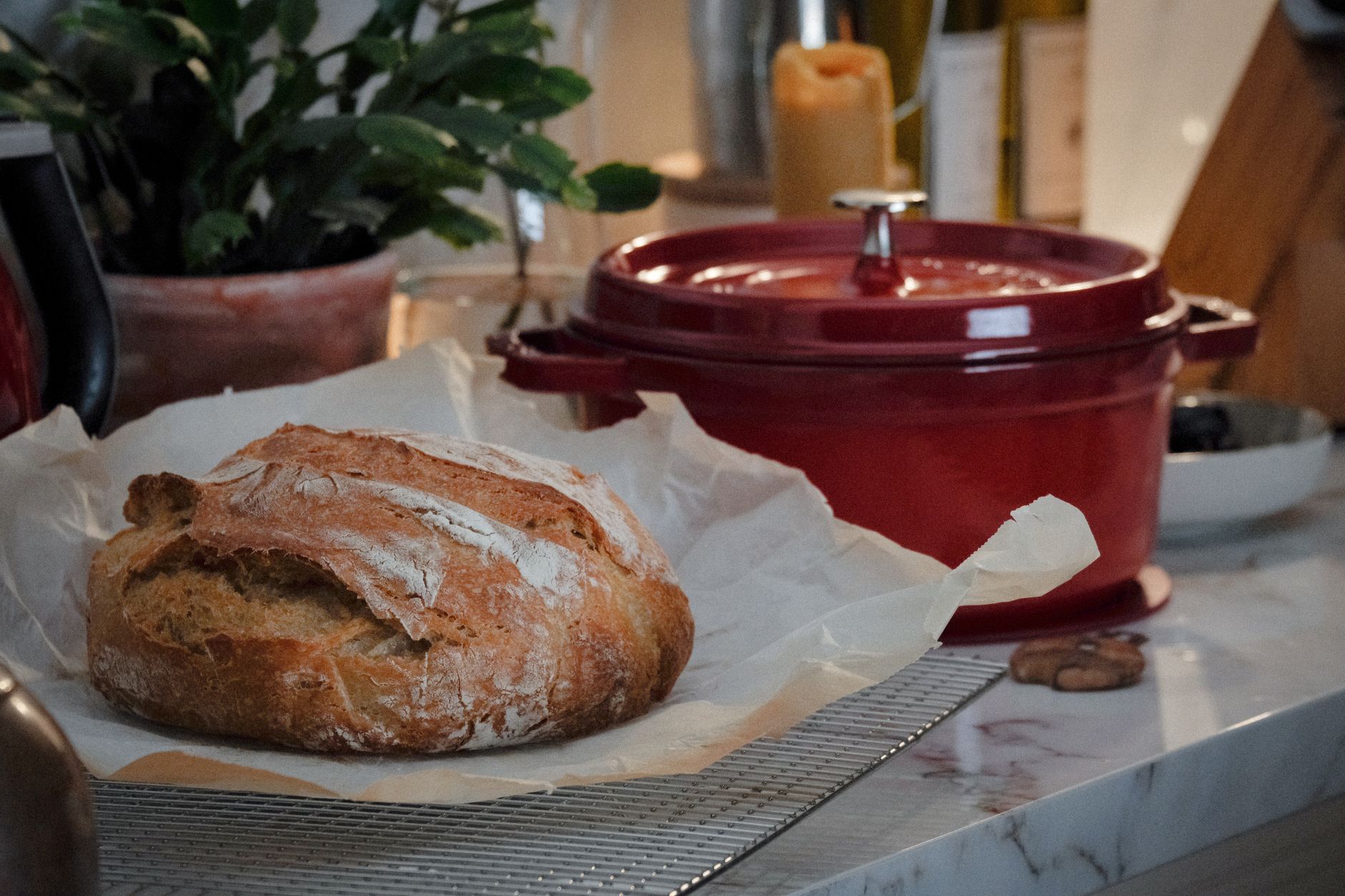
I spent most of my twenties buying $7 sourdough loaves and feeling bad about it. Every Saturday at the farmers market. Then my friend Jen — who burns toast regularly — handed me a loaf she made. It had that crackly crust and those big irregular holes inside. I did not believe her when she said she did not knead it.
“You literally just wait,” she said.
She was not wrong. No-knead bread works on time, not effort. Flour, water, salt, a tiny bit of yeast. Stir it into a shaggy mess, cover, and walk away for 12 to 18 hours. That is the whole technique. The long rest does the work that kneading would — gluten develops slowly, fermentation builds flavor.
” alt=”Dutch oven bread fresh from oven”>
Why the Dutch Oven Matters
A Dutch oven traps steam. Commercial bakeries have steam-injected ovens for this exact reason — steam keeps the crust flexible long enough for the bread to spring upward, what bakers call “oven spring.” At home, a preheated Dutch oven does the same thing. The lid holds the moisture from the dough itself.
Preheat the pot for at least 30 minutes at 450°F. Drop your dough onto parchment paper, lower it into the scorching pot, put the lid on. Bake covered for 30 minutes, then uncover for another 15 to brown the crust.
My first loaf looked like a deflated basketball because I skipped preheating the pot. The dough hit cold cast iron and just sat there. Do not skip this step. The sizzle when the dough touches the hot surface is what you want.
Getting the Dough Right
The ratio that works every time:
- 3 cups all-purpose flour (bread flour is even better)
- 1¼ teaspoons salt
- ¼ teaspoon instant yeast — yes, that little
- 1½ cups warm water
Stir until no dry flour remains. The dough will look wet and ugly. That is correct. Cover with plastic wrap and leave it on the counter overnight. In the morning it will be bubbly and smell faintly like beer.
Turn it out onto a floured surface, fold the edges toward the center a few times to shape it into a rough ball. Let it rest 30 more minutes while the oven and pot heat up.
Things That Go Wrong
The sticky dough panic is real. Your hands will be a mess. I keep a bowl of water nearby and wet my fingers before touching the dough — it stops sticking. A dough scraper also helps, but wet hands work fine.
If your bread comes out dense with tiny uniform holes instead of those big airy ones, you either did not let it ferment long enough or your kitchen was too cold. In winter I put the dough in the oven with just the light on — that bump from 65°F to 75°F makes a difference.
I have made this bread maybe 50 times now. Every single time someone asks if I went to bakery school. I tell them the truth: I stirred flour into water and went to sleep.
📋 Quick Summary: Stir flour, water, salt, and a pinch of yeast — let it sit overnight — bake in a preheated Dutch oven at 450°F (30 min covered + 15 uncovered). That is it. No mixer, no kneading, no skill required.