How to Sharpen Kitchen Knives Without a Sharpener
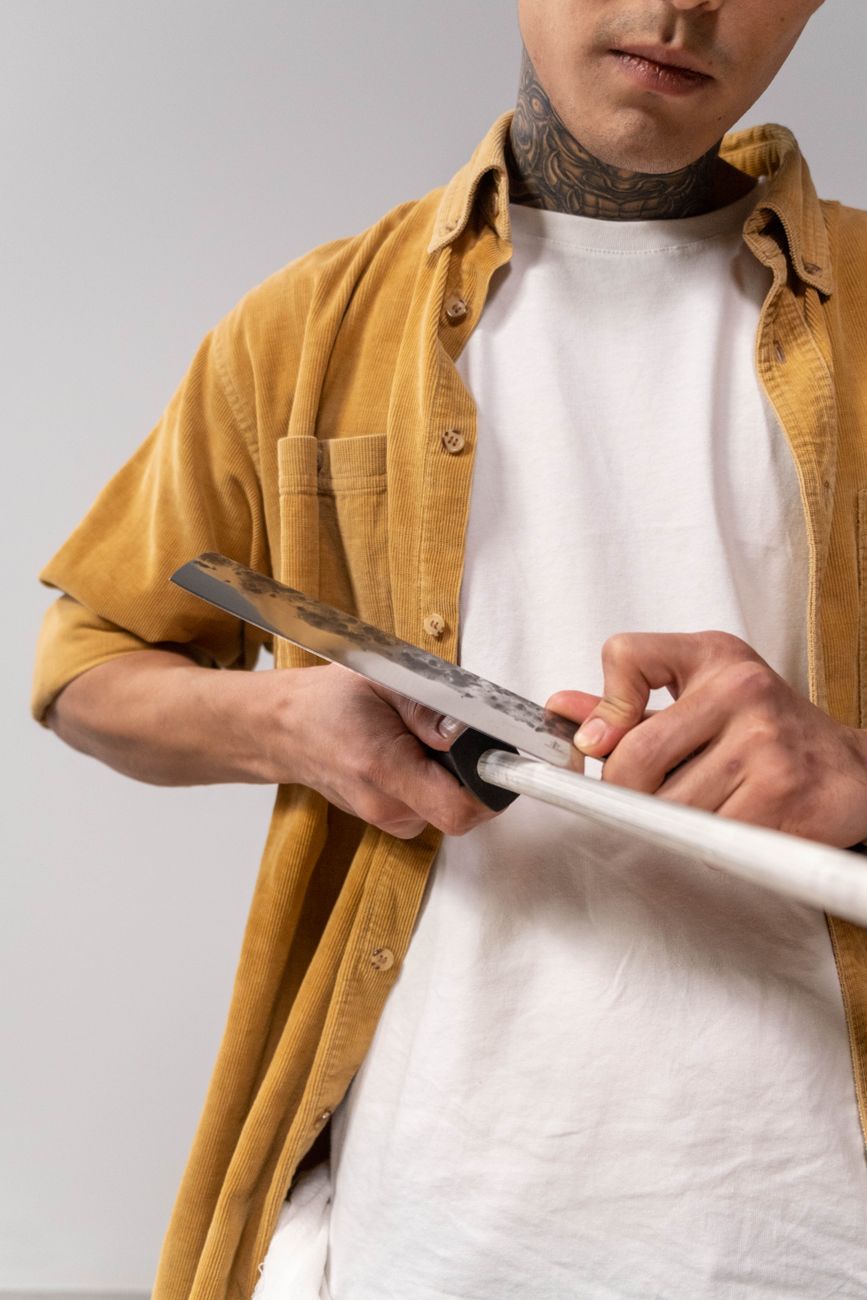
I once tried slicing a tomato with a knife so dull it just slid off the skin like it was made of rubber. That was the moment I realized I had been “sharpening” my knives wrong for years — running them through one of those pull-through gadgets that actually remove metal without creating a real edge.
The truth is you do not need a fancy sharpener. You probably have three things in your kitchen right now that can put a workable edge on a dull blade.
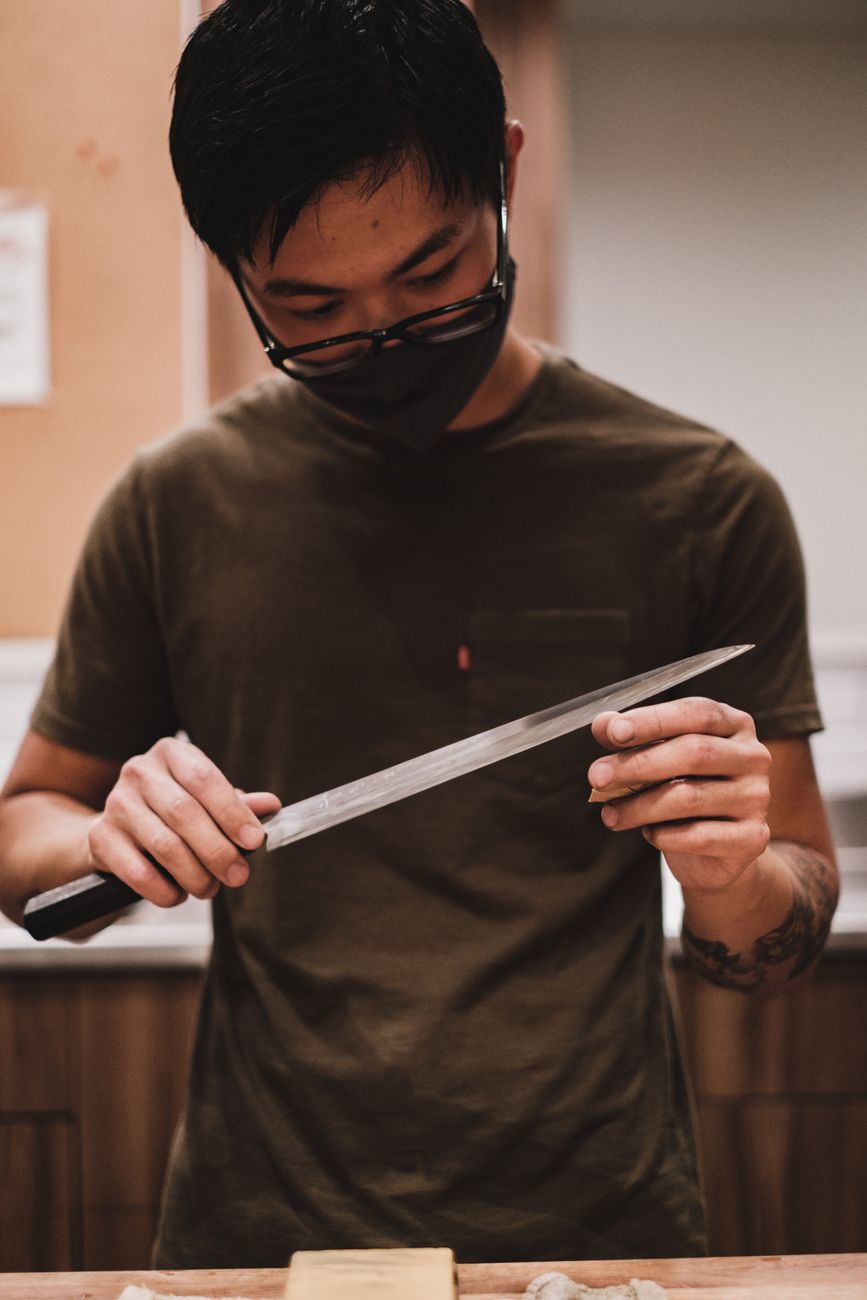
How a Knife Edge Actually Works
A sharp knife is just a very thin wedge of metal with a consistent angle. Sharpening removes a tiny amount of metal to create that wedge. Honing — what a steel rod does — realigns the edge without removing metal. Most dull knives do not need sharpening; they need honing. If your knife can still cut paper (even roughly), it is a honing problem, not a sharpening problem.
The Bottom of a Ceramic Mug
Flip over a ceramic coffee mug. See that unglazed ring on the bottom? That ring is fine-grit ceramic — basically a sharpening stone. Run your knife along it at a 15-20 degree angle (about the thickness of a matchbook under the spine), heel to tip, with light pressure. Ten strokes per side. Rinse the blade. Test on paper. I have done this at an Airbnb with knives that could not cut butter and made them functional in under two minutes.
Sandpaper on a Flat Surface
Tape a sheet of 600-grit wet/dry sandpaper to a cutting board or countertop. Wet it. Drag the knife across at the same 15-20 degree angle, alternating sides every few strokes. Start with 400 grit if the knife is really dull, then move to 600, then 1000. The key is keeping the angle consistent — that matters more than the grit. I keep a small pack of sandpaper in the kitchen drawer for this exact reason.
A Leather Belt (For Stropping)
After sharpening, strop the blade. Pull the knife backwards along an old leather belt (spine-first) to remove the microscopic burr left by sharpening. This is what gives you that “push cut paper” sharpness. No compound needed — plain leather works. I use a belt I bought at a thrift store for two dollars, and it has lasted five years.
What About the Car Window Trick?
You have probably seen the internet tip about using a car window edge. Technically the top edge of a rolled-down window is unfinished glass and can act like a ceramic hone — but it is inconsistent, difficult to control the angle, and risks chipping the blade. Skip this one. The mug bottom is better in every way that matters.
📋 Quick Summary: Ceramic mug bottom (unglazed ring) = free sharpening stone. Sandpaper on a board = controlled resharpening. Leather belt = final stropping. Keep the angle consistent (15-20 degrees). Most “dull” knives just need honing, not sharpening.