Hang Curtain Rods Without Making a Mess of Your Wall
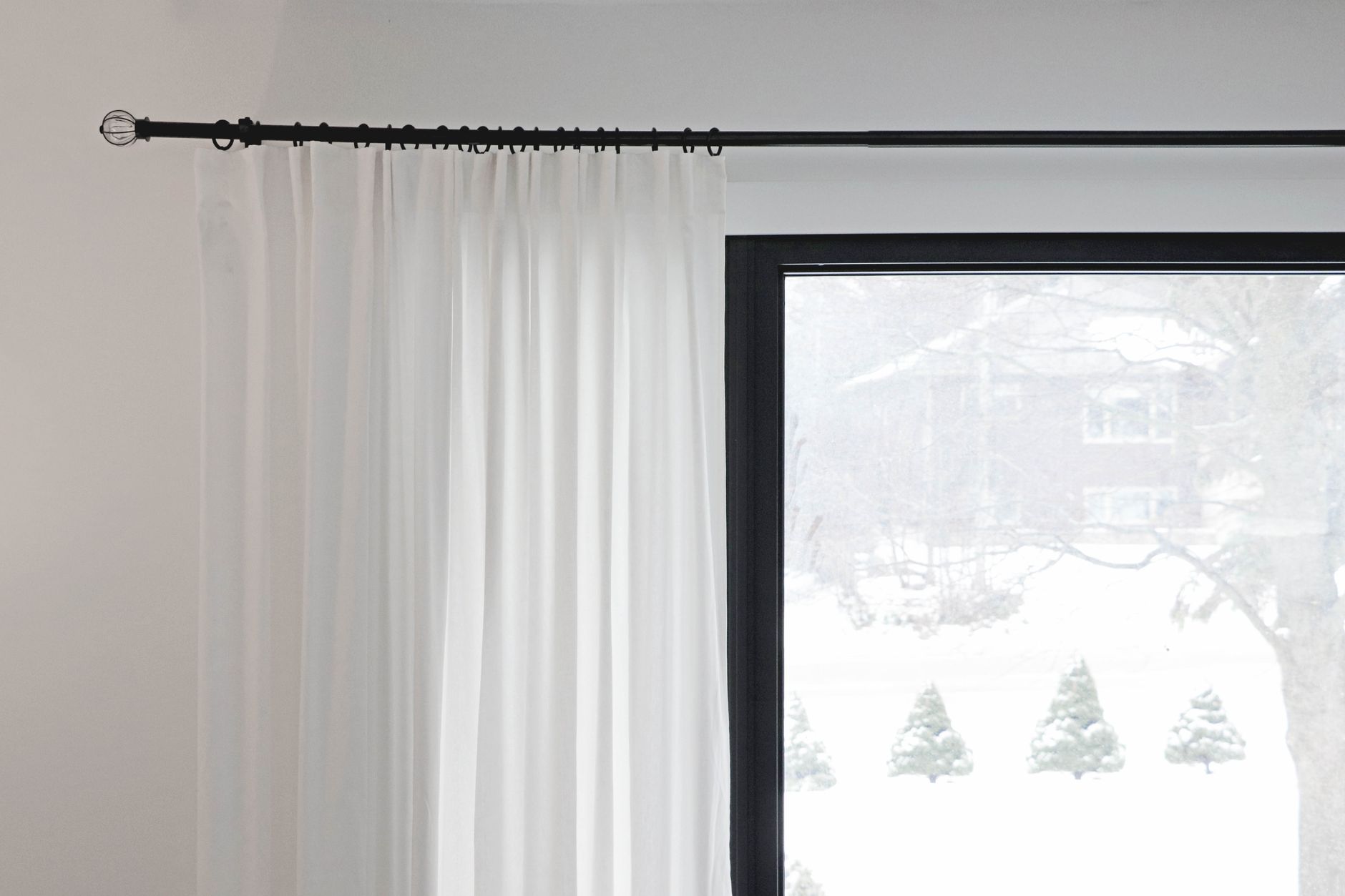
The first curtain rod I ever hung came crashing down at 3 AM. Sounded like someone threw a chair through the window. The brackets had pulled right out of the drywall, leaving two gaping holes I had to patch and repaint.
Curtain rods carry more weight than you think — especially with blackout curtains or thermal drapes. Here is how to hang them so they stay up forever, and how to do it without turning your wall into Swiss cheese.

Find the Studs — Actually
Drywall anchors are fine for light curtains. But for anything heavier than a sheer panel, you want at least one bracket in a stud. Get a stud finder — they cost ten bucks — and mark both edges of each stud, not just the center. The center mark might be off, but knowing the edges tells you exactly where the solid wood is.
Tap a small finish nail where you think the stud is before drilling. If it hits solid wood behind the drywall, you are in the right spot. If it punches through into empty cavity, adjust.
Bracket Placement: Higher and Wider Than You Think
Mount the brackets four to six inches above the window frame and three to six inches wider than the window on each side. This makes the window look taller and wider, and it lets the curtains stack back fully without blocking any glass when open.
I used to mount brackets right at the frame edge. The room looked smaller and the curtains blocked half the window even when “open.” Moving them up and out transformed the room.
Level Is Non-Negotiable
Use a laser level if you have one. If not, a regular four-foot level works — just double check by measuring down from the ceiling at both ends as a sanity check. Ceilings are not always level, but they are the visual reference point. If your rod is perfectly level but the ceiling slopes, the rod will look crooked. Split the difference: favor what looks right to the eye.
If You Hit a Drywall Anchor Limit
Toggle bolts hold 50 to 100 pounds each in drywall. They are overkill for most curtains but lifesavers when you cannot find a stud. The downside is they leave a half-inch hole if you ever remove them. Molly bolts are a good middle ground — hold about 25 pounds, smaller hole. Plastic expansion anchors are junk for anything heavy. Skip them entirely.
Before You Drill: Check for Wires and Pipes
Stud finders with AC detection will beep if there is live electrical wire behind the drywall. Worth the extra five dollars. Never drill directly above or below an outlet or switch — that is where the wiring runs vertically through the wall.
📋 Quick Summary: Hit a stud whenever possible. Mount brackets higher and wider than the window frame. Use a level but trust your eyes against the ceiling line. Toggle bolts for heavy curtains when no stud is available.