Keep Your Knives Sharp Without a Sharpener

I used to think a sharp knife meant buying a whetstone and learning a skill that looked like it required a black belt. So I put it off. For years. My chef’s knife got so dull I was basically mashing tomatoes instead of slicing them.
Then my brother-in-law, who is a line cook, watched me struggle through an onion and said, “You know you can fix that with a coffee mug, right?” I thought he was joking.
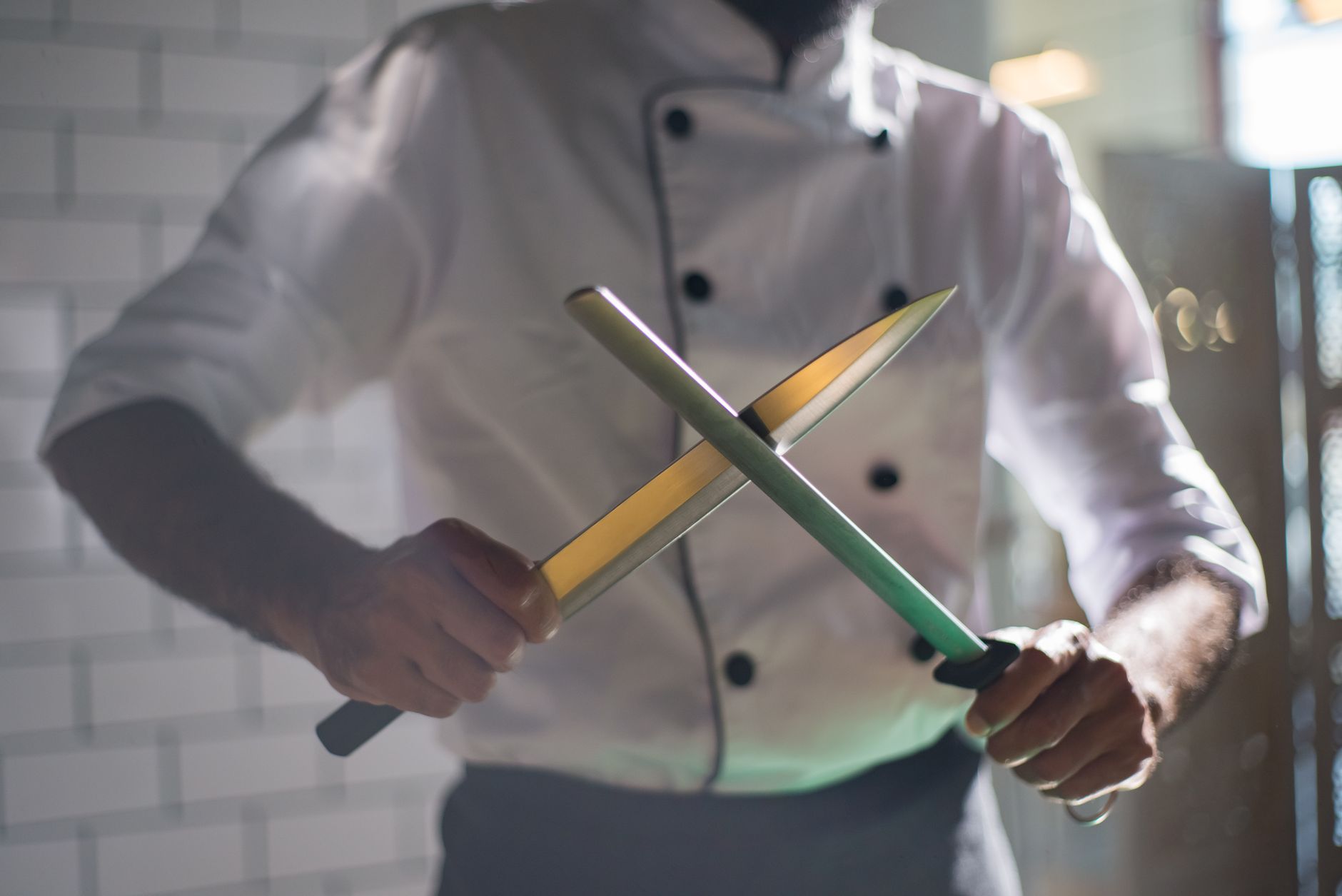
The coffee mug trick
Flip a ceramic coffee mug upside down. The unglazed ring on the bottom the rough part that sits on the table is basically a makeshift ceramic honing rod. Run your knife along that ring at a 20-degree angle, alternating sides, about ten passes each. It will not turn a butter knife into a scalpel, but it will bring a dull blade back to functional.
I tested this on my paring knife before a dinner party when I realized it could not cut through a cherry tomato skin. Ten passes on the mug, and it sliced cleanly again. Not perfect. But dinner got made.
Why knives go dull (it is not what you think)
The edge on a kitchen knife is microscopically thin. It bends over time like folding a piece of paper back and forth. A honing steel does not sharpen, it just straightens that bent edge. Actual sharpening removes metal to create a new edge.
Most “dull” knives at home are actually just bent at the edge, not worn down. A few passes on a steel or ceramic surface straighten things out. You probably only need true sharpening once or twice a year.
Other household sharpeners
The bottom of a ceramic plate or bowl works the same as the mug. So does the rough edge of a car window (the top edge when it is rolled partway down sand the knife along it gently). A leather belt loaded with a dab of toothpaste makes a decent strop for finishing an edge. The fine abrasive in toothpaste polishes the blade.
None of these replace a real sharpening session. But they keep you cooking when your knife goes dull on a Sunday evening and every store is closed.
Prevention is easier than repair
The fastest way to kill a knife edge: scraping food across the cutting board with the blade facing down. That drag motion rolls the edge over instantly. Flip the knife and use the spine to scrape. It feels wrong at first like brushing your teeth with the wrong hand but your knives will stay sharp three times longer.
Also: hand wash and dry immediately. The dishwasher rattles knives against other metal, and the detergent is abrasive. A single dishwasher cycle can undo a professional sharpening job.
Quick Summary: A ceramic mug’s unglazed bottom ring can hone a dull knife in seconds. Scrape with the spine, not the blade edge, and never put good knives in the dishwasher.