Why You Should Salt Your Cutting Board Not Your Steak
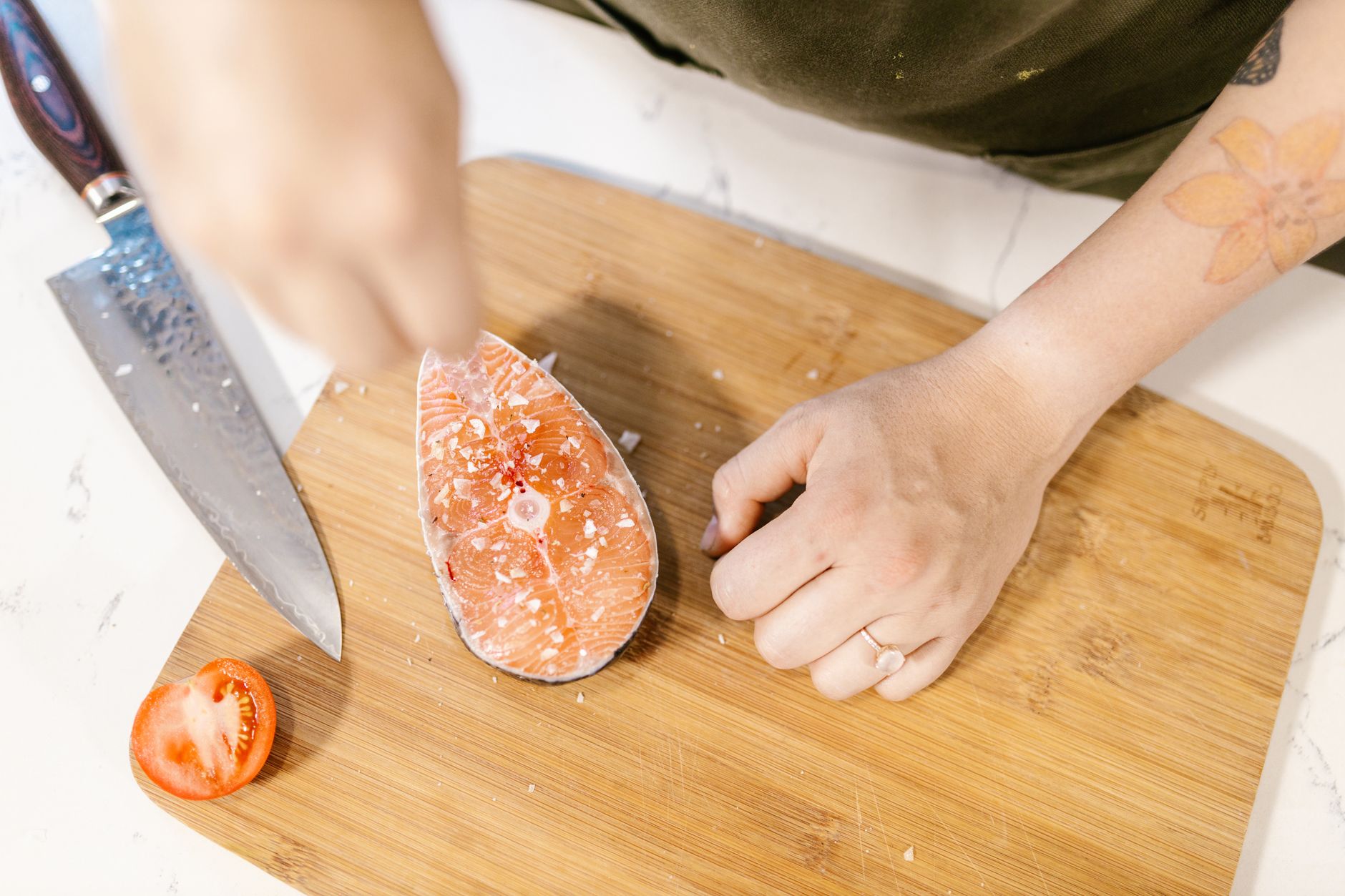
You know that thing where you season a steak, and half the salt bounces off and lands on the counter? I did that for years. I would sprinkle, some of it would stick, and the rest would scatter everywhere except on the meat.
Then a friend who worked a grill station for a decade watched me and said one thing that changed how I cook: “Salt the board.”
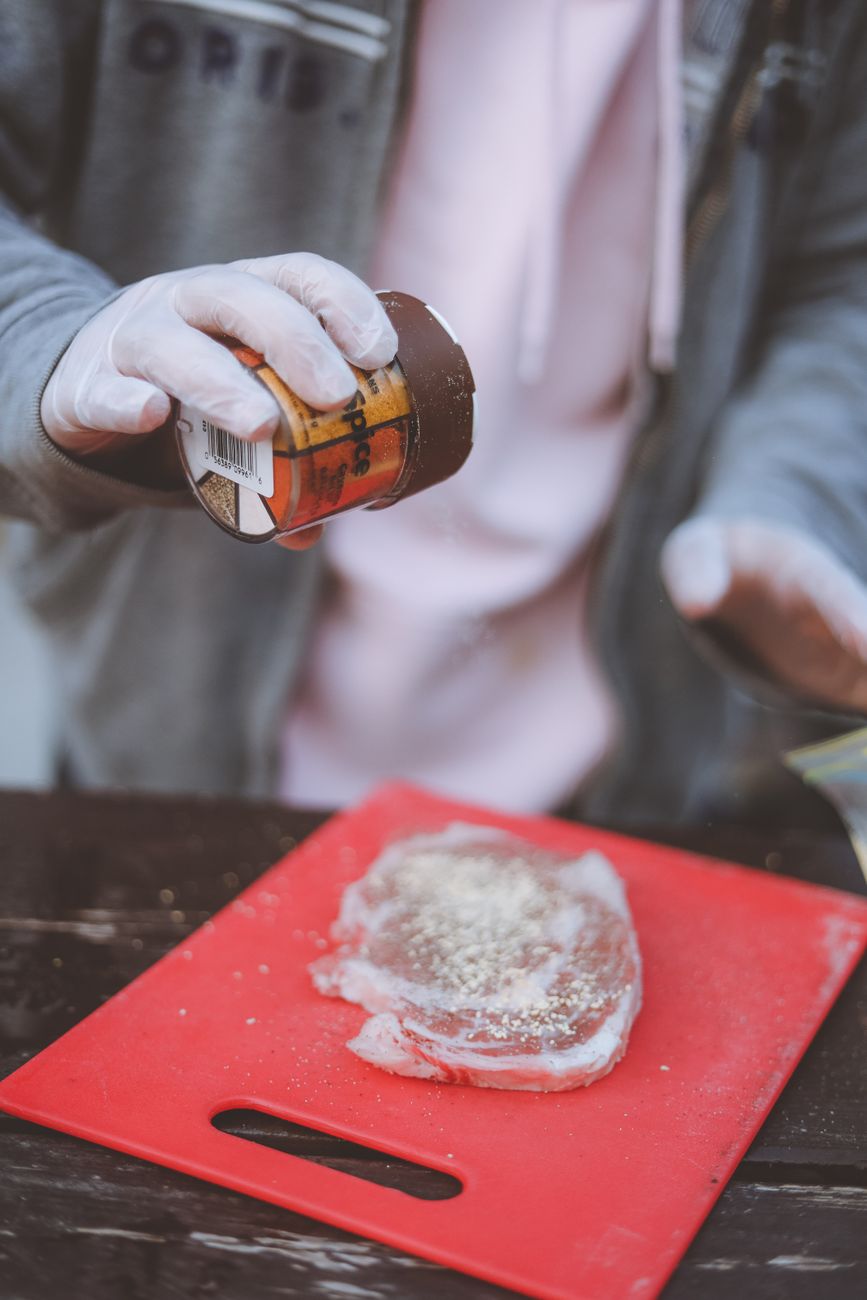
What salting the board actually means
Instead of sprinkling salt over the top of the meat, you spread a layer of salt right on the cutting board, then press the meat down into it. The salt sticks to every bit of surface that touches the board. Flip and repeat for the other side.
You get even coverage with no salt bouncing off, and you use less salt overall because none of it is wasted.
Why it works better than sprinkling
When you sprinkle from above, you are seasoning the air, the counter, and then the meat. When you press the meat into a salted board, every grain that touches the surface stays there.
It also makes sense for cuts like chicken thighs or pork chops that have uneven surfaces. Pressing gets salt into all the little grooves a sprinkle misses.
The one rule to remember
This works great for steak, chops, and chicken. It does not work as the only seasoning step for a roast, where the salt needs to sit deeper. And it is not a substitute for salting early when you want the salt to actually season the inside.
For a quick weeknight cook, though, salting the board is the fastest way to get it right the first time.
Do you still salt after?
I still finish with a tiny pinch of flaky salt after cooking. That finishing salt is about texture and that first hit on your tongue. The board salting is what does the real seasoning work underneath.
📋 Quick Summary: Spread salt on the cutting board and press the meat into it. Even coverage, less waste, no salt bouncing off.