Organize Kitchen Drawers So Everything Has a Home
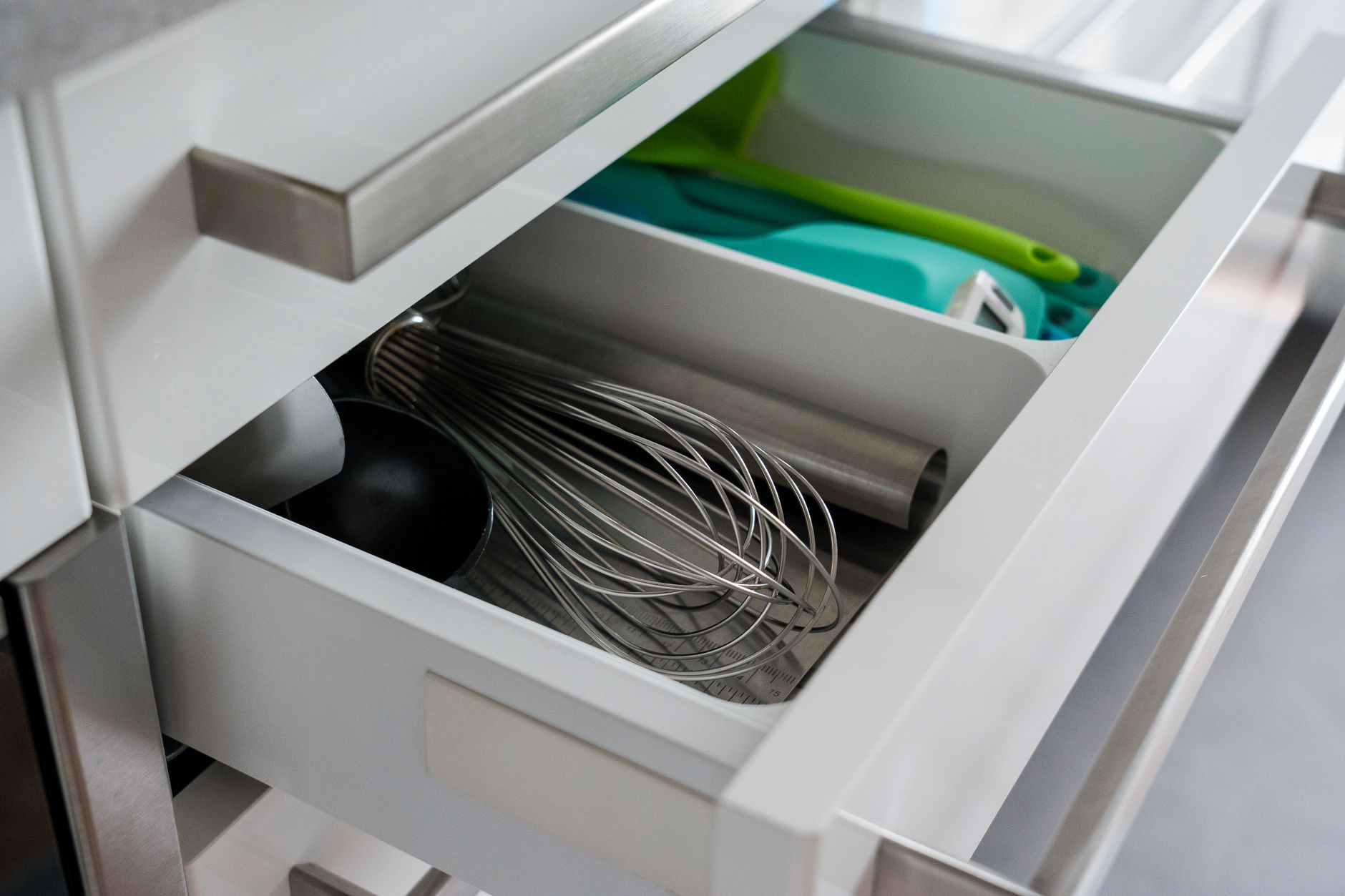
For three years I had a kitchen drawer that was basically a landfill. Spatulas tangled with tongs. Whisks wedged between ladles. A potato masher I have never used, taking up prime real estate. Every time I needed a wooden spoon I had to excavate for ten seconds while the garlic burned.
One Saturday I dumped the entire drawer onto the counter and did not put a single thing back until I had a system. That drawer has stayed organized for over a year now. Not because I am disciplined. Because the system makes it harder to be messy than to be neat.
Empty Everything First
This is the part everyone skips. You cannot organize a drawer by moving things around. Dump it all out. Every last item. Wipe the drawer clean — crumbs and dust collect in corners you forgot existed. Look at what you actually have. I found three vegetable peelers. Three. I live alone.
Get rid of duplicates, broken things, and anything you have not used in a year. The garlic press I bought in 2019 went into the donation box. I mince garlic with a knife. I always have. The press was just drawer weight.
Drawer Dividers Are Not Optional
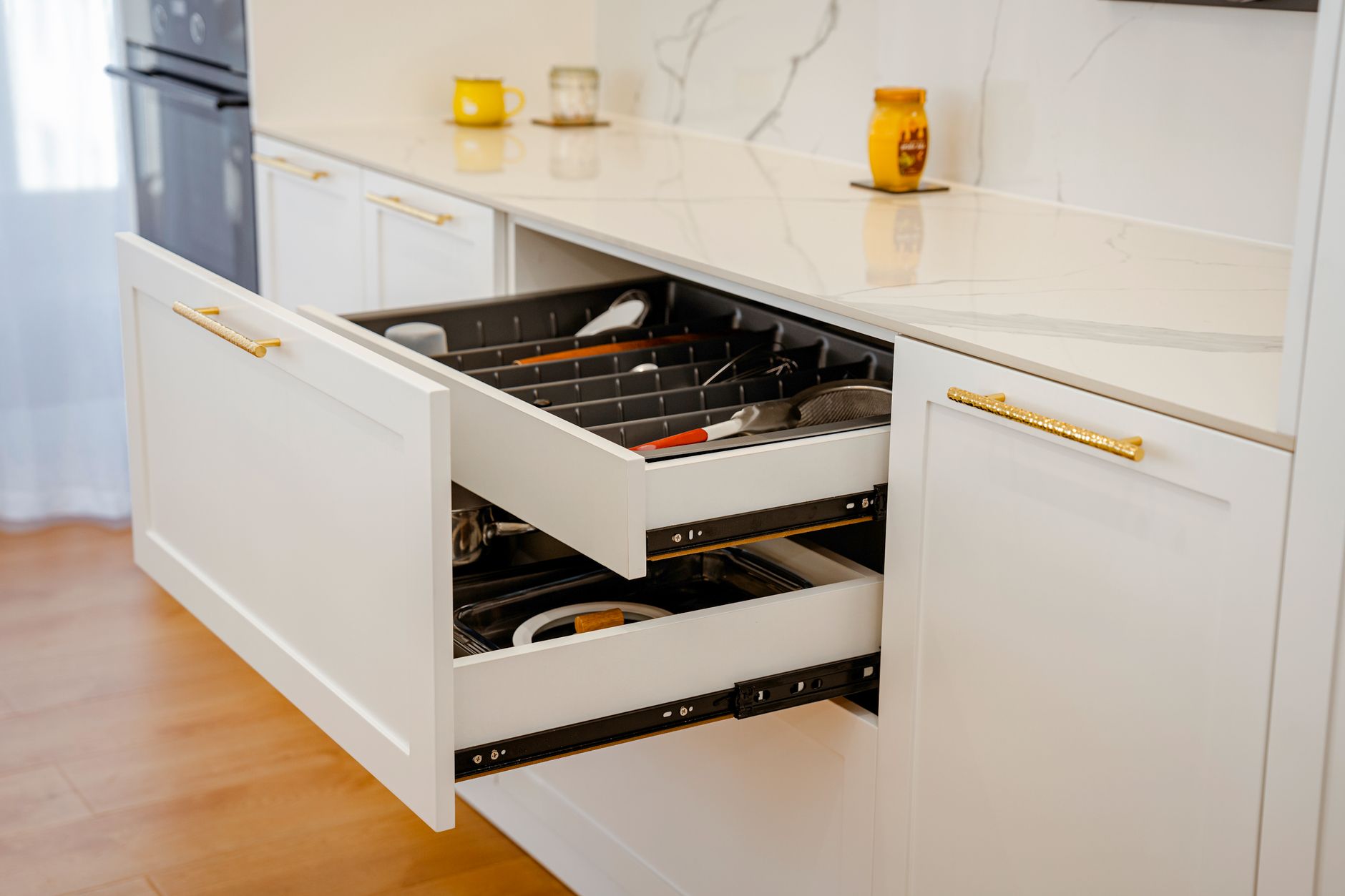
An empty drawer is a big rectangle. Big rectangles collect chaos. You need boundaries. Drawer dividers turn one big rectangle into six or eight small rectangles, and small rectangles stay organized because there is only room for one category of thing in each.
You do not need to buy fancy bamboo dividers. Small cardboard boxes cut to height work perfectly. Shoe box lids, shipping boxes, cereal boxes with the tops cut off. I used an old iPhone box for rubber bands and twist ties. It has been in there for two years.
The Zone System
Every kitchen drawer should have zones based on how you actually cook:
- Zone 1 — Grab zone: The things you reach for every single time you cook. Wooden spoon, spatula, tongs. These go in the front of the drawer, closest to where your hand naturally reaches.
- Zone 2 — Frequent zone: Things you use a few times a week. Whisk, can opener, measuring spoons. Middle of the drawer.
- Zone 3 — Occasional zone: Specialized tools. Meat thermometer, zester, pastry brush. Back of the drawer. They are still accessible but not in the way of daily cooking.
Arrange the dividers to match these zones. The front section might have two compartments (spoons and spatulas). The back might be one wide compartment for the odd-shaped stuff.
The Vertical Trick
If you have deep drawers, do not stack. Stacking means the thing you want is always on the bottom. Instead, store long utensils vertically in a tall container — like a utensil crock but inside the drawer. I used a tall, narrow box from a set of cocktail glasses. Whisks, spatulas, and tongs stand upright. I can see every utensil at a glance.
This only works if your drawer is deep enough. Measure before you cut anything.
Maintenance Is the Hard Part
The drawer did not stay organized because I am neat. It stayed organized because it is easier to put things back in the right compartment than to cram them wherever. When every item has a designated spot the size of that item, putting it somewhere else feels wrong.
I still occasionally toss a spoon into the wrong section when I am in a hurry. But once a week I spend thirty seconds correcting drift. That is it. Thirty seconds a week versus ten seconds of frustration every time I cook.
📋 Quick Summary: Dump everything out, toss duplicates, create zones with dividers, store long tools vertically, front = daily use. A system where everything has a home stays organized.