My Wife Bought a 40-Pound Mirror With No Studs Behind It — Here Is How I Hung It Without Destroying the Wall
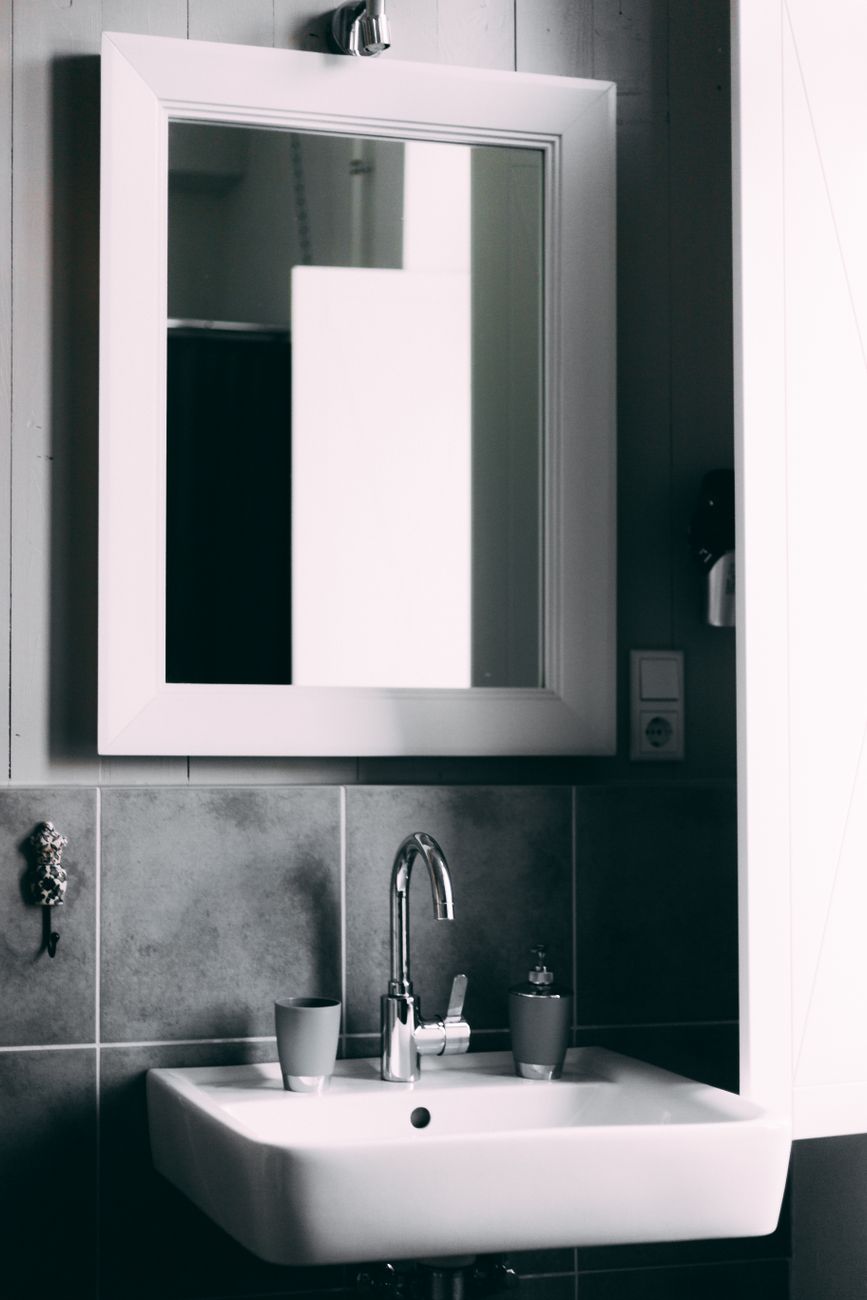
She came home with a mirror the size of a small door. Gorgeous, heavy wood frame, beveled glass. “Where are we hanging this?” she asked. I pointed at the wall. Then I knocked on the wall. No stud. Knocked left. No stud. Knocked right. No stud. The entire section was hollow drywall with the nearest studs sixteen inches apart on either side.
If you have ever held a drill while your spouse watches expectantly, you know the pressure. This was going to go well or we were going to have a mirror-sized hole in the wall.

The Hardware That Actually Holds Weight
Drywall anchors from the hardware store are rated for weight, but those ratings are laboratory conditions — perfect installation, no vibration, no one bumping into the mirror. In the real world, a 40-pound mirror needs hardware rated for at least triple that.
What I used: toggle bolts, also called butterfly anchors. They have spring-loaded wings that fold flat to go through a drilled hole, then spring open behind the drywall. The weight is distributed across a metal bar behind the wall, not a tiny plastic plug embedded in gypsum.
Each ¼-inch toggle bolt in ½-inch drywall holds about 100 pounds in shear (downward force). I used four of them. Total capacity: roughly 400 pounds for a 40-pound mirror. That is the kind of safety margin that lets you sleep at night.
The Installation Method That Prevents Disaster
- Mark your holes precisely. Use a level. Use it twice. A tilted mirror announces to every guest that you did this yourself and gave up halfway.
- Drill holes just slightly larger than the folded toggle — usually ½ inch for ¼-inch toggles. Err on the tight side. A sloppy hole reduces holding power.
- Thread the bolt through the mounting bracket first, then attach the toggle wings. You cannot reverse this order.
- Push the toggle through the hole until you feel the wings spring open. Pull back gently to seat them against the back of the drywall.
- Tighten slowly. You will feel resistance when the wings engage. Stop when snug — over-tightening strips the drywall and ruins the anchor.
What I Almost Did Wrong
I nearly used plastic expansion anchors — the ribbed kind you hammer into a hole. They are rated for 50 pounds in ½-inch drywall, which technically covers a 40-pound mirror. Do not do this. Those ratings assume static downward load. As soon as someone bumps the mirror or a door slams, the dynamic force spikes way beyond 40 pounds. Plastic anchors pull out. Mirror shatters. Wife is unhappy. Lesson: toggle bolts. Always toggle bolts for mirrors.
Quick Summary: Use ¼-inch toggle bolts (rated ~100 lbs each in shear) to hang heavy mirrors on hollow drywall — install at least double the anchors you think you need for a safety margin that survives real-world bumps and door slams.