Make Your Stove Top Look Brand New in 10 Minutes — No Scrubbing Required
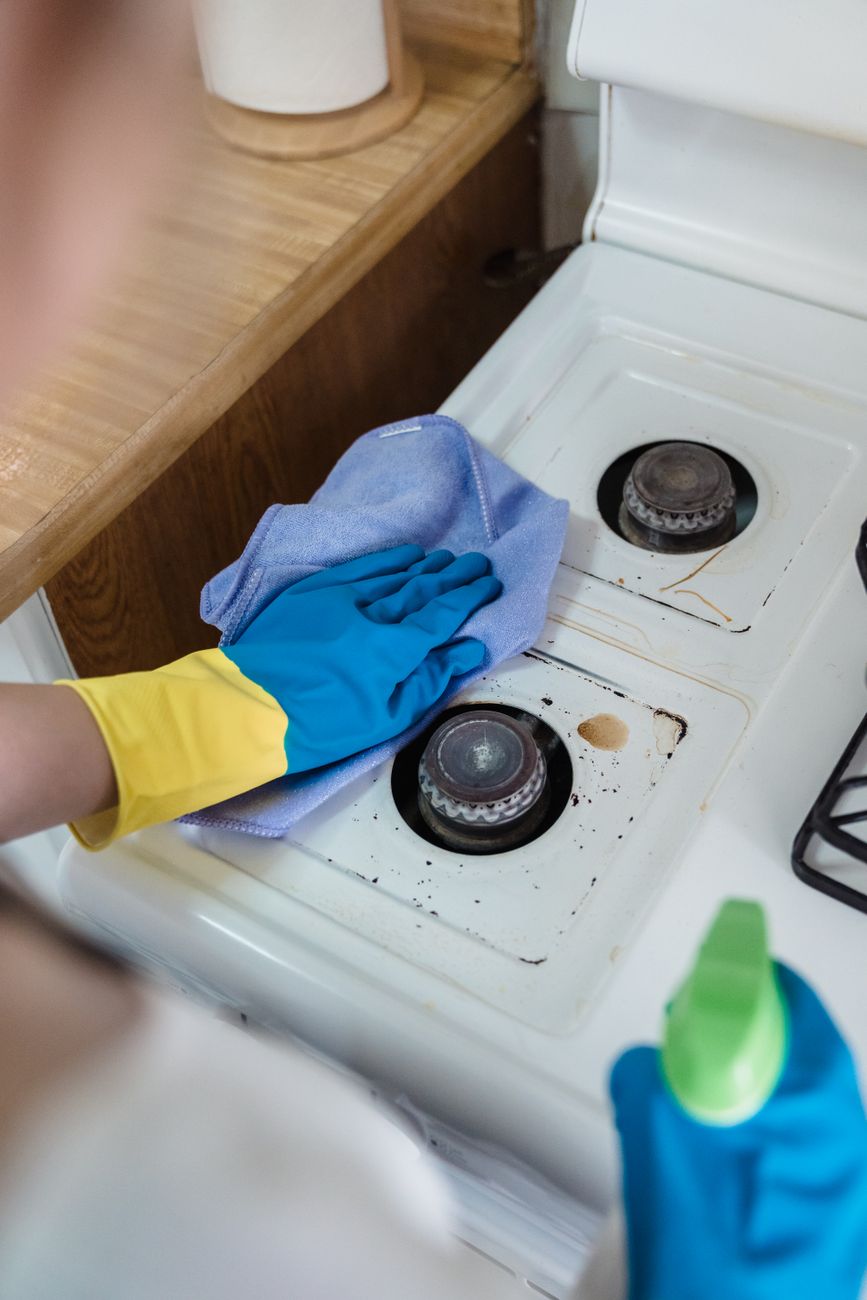
My stove top had a ring of brown crust around every burner — months of boiled-over pasta water and splattered oil baked on by repeated heating. I had scrubbed at it with a sponge and dish soap multiple times and made almost no progress. I assumed it was permanently stained.
It was not stained. I was using the wrong cleaner.
The Method That Actually Works
For glass/ceramic cooktops (the flat kind) and gas stove grates alike, the secret weapon is baking soda and hydrogen peroxide — not harsh chemical cleaners.
- Sprinkle baking soda generously over the entire surface. Get it into the burned-on rings. A thin dusting is not enough — you want a visible layer.
- Spray hydrogen peroxide over the baking soda. It will fizz. That is the reaction breaking down the grease bonds.
- Lay a warm, damp dish towel over everything. The warmth and moisture help the reaction work. Leave it for 15-20 minutes. Do not rush this step — the waiting is what does the work.
- Remove the towel and wipe. Most of the gunk will come off with the towel. For stubborn spots, use a plastic scraper (a credit card works in a pinch) held at a 45-degree angle to scrape off the softened crust.
- Final wipe with a microfiber cloth and white vinegar. This removes any baking soda residue and leaves the surface streak-free.
For Gas Stove Grates
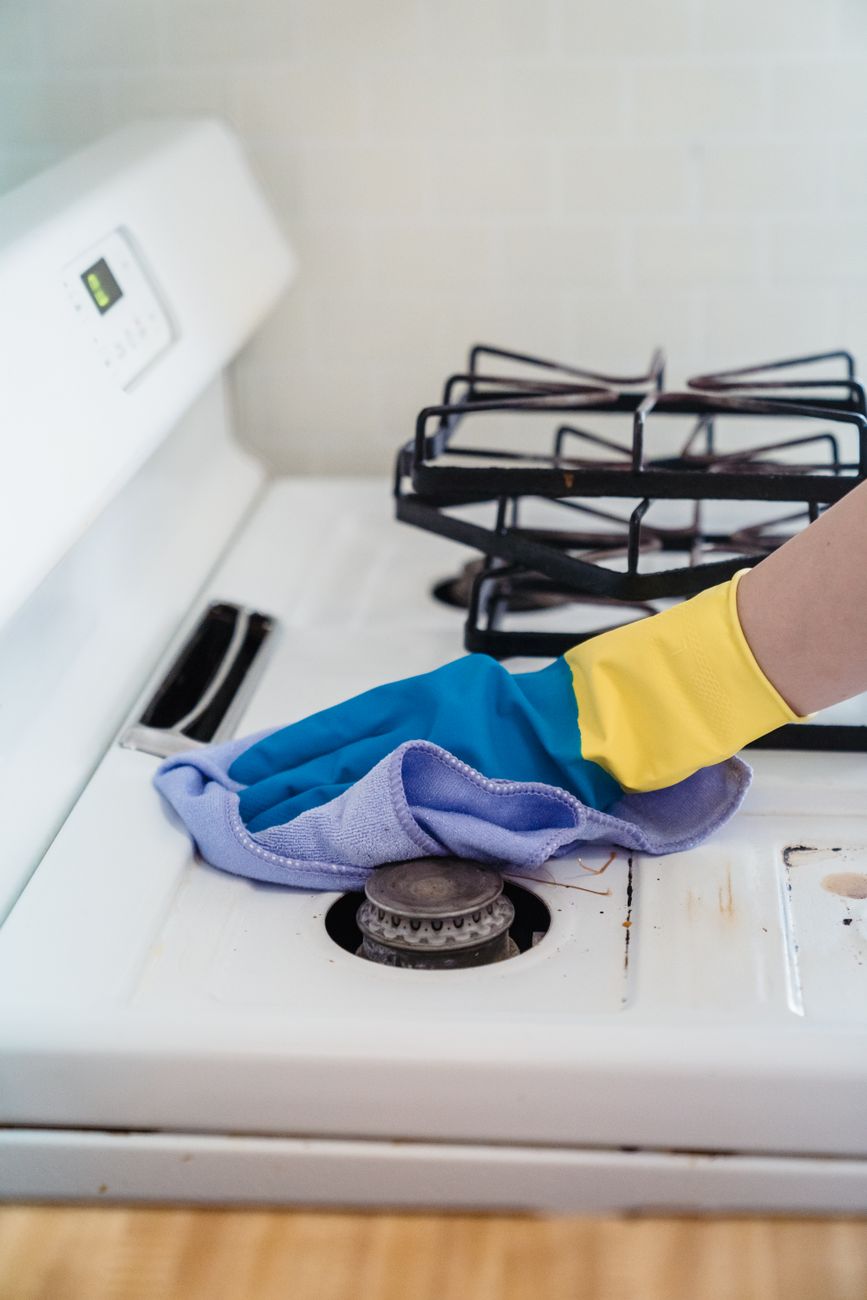
Put the grates in a large Ziploc bag with 1/4 cup of ammonia. Seal it and leave it outside or in a well-ventilated area overnight. The ammonia fumes dissolve the baked-on grease. In the morning, rinse with water and the gunk slides off. Do not mix ammonia with anything else — especially not bleach.
My stove top looks new. It took 10 minutes of active work and 20 minutes of waiting while I did other things.
📋 Quick Summary: Baking soda + hydrogen peroxide + warm damp towel for 20 minutes. Wipe away — no scrubbing. For gas grates: ammonia in a sealed bag overnight. Never mix ammonia with bleach.