Knife Sharpening Basics That Made My Cheap Knives Feel Expensive
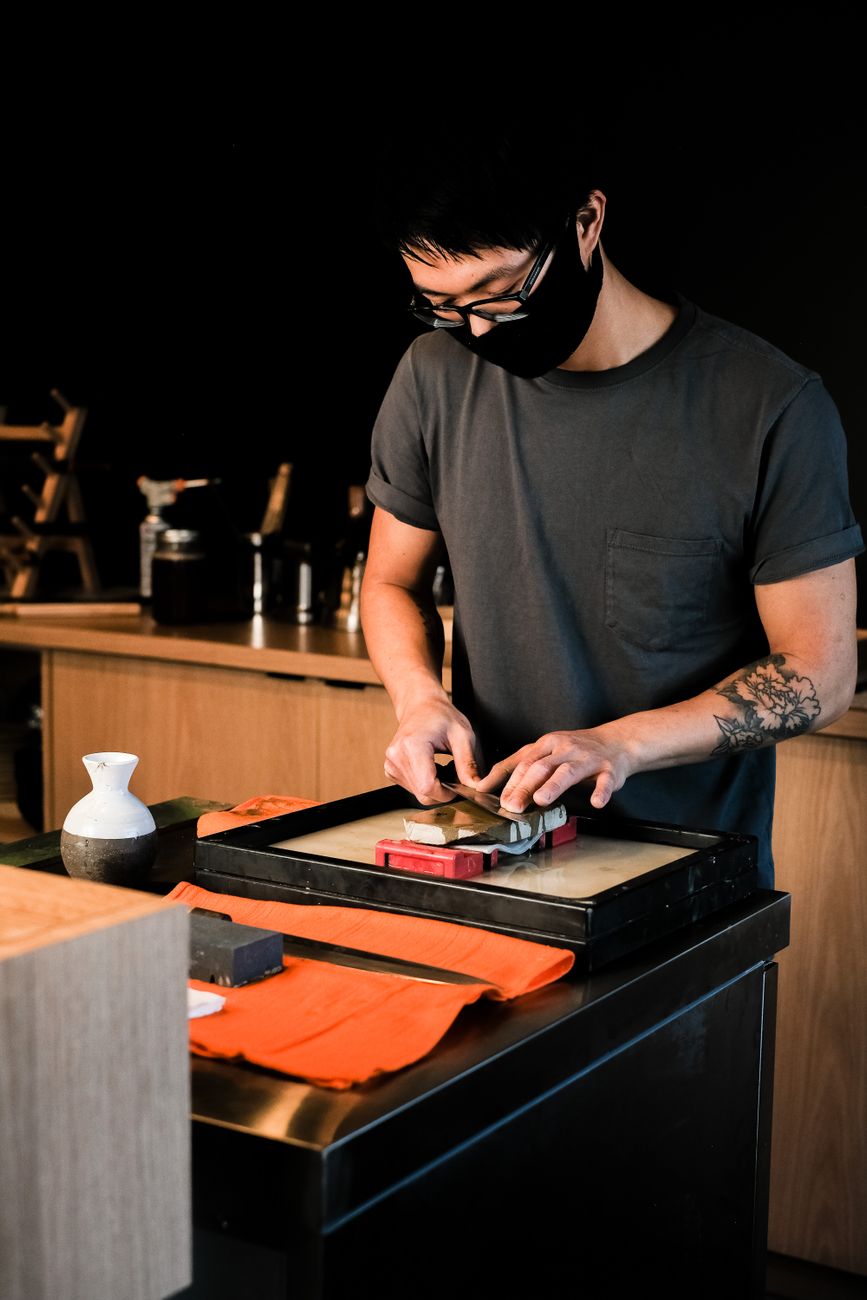
I bought a whetstone, watched two videos, and made every knife in the house duller than they were before.
My mistake is the one nearly everyone makes. I held the blade at too shallow an angle and rocked the knife as I moved it, which rounded the edge instead of sharpening it.
The angle is the whole game
Most kitchen knives want about 15 to 20 degrees per side. That is roughly the angle of two stacked coins under the spine of the blade.
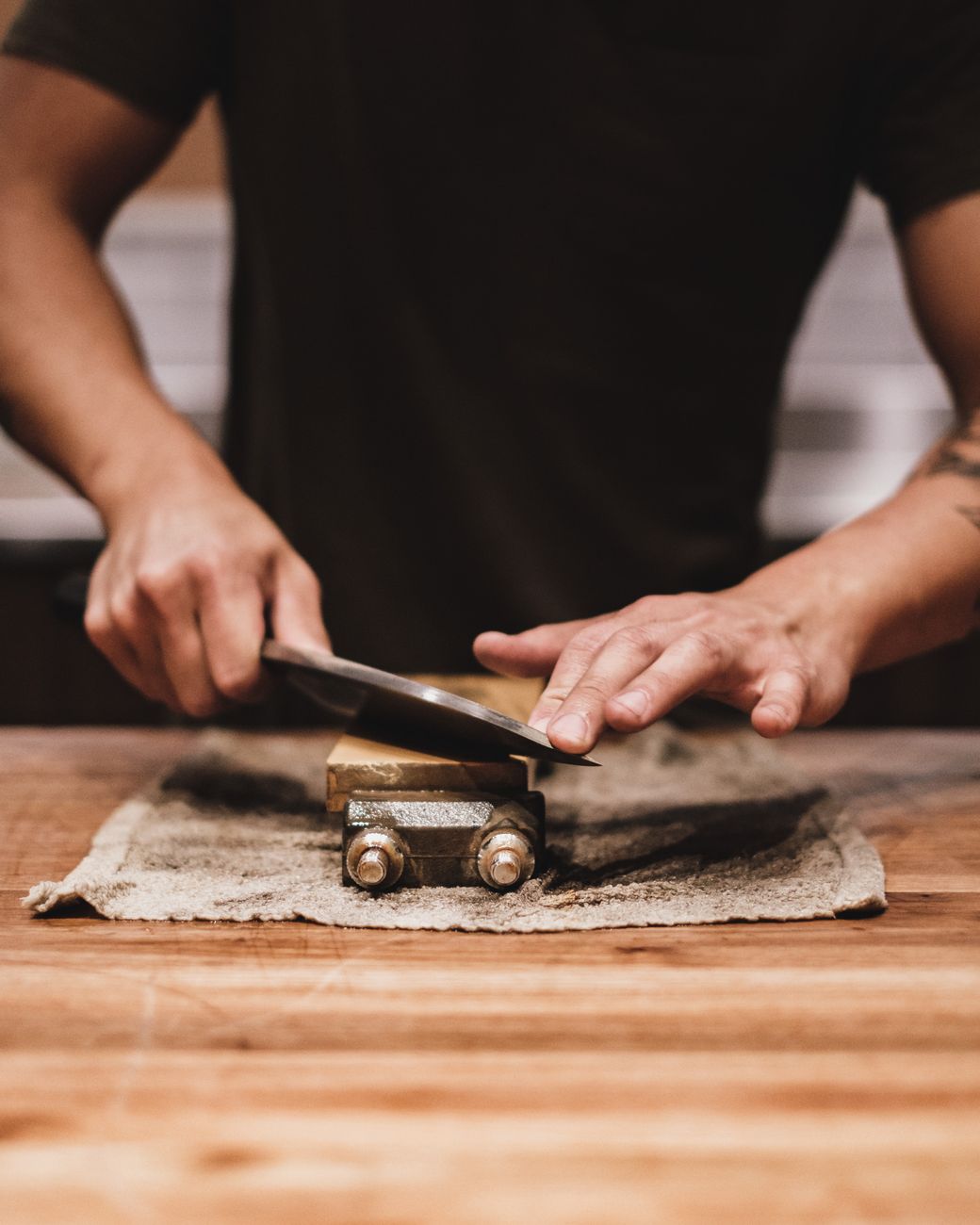
Pick the angle once and lock your wrist. The edge follows your elbow, not your fingers. If the angle changes mid stroke, you are grinding a curve.
The basics, in order
- Soak a water stone for 10 minutes. It should be damp, not dripping.
- Place the stone on a damp towel so it does not slide.
- Push the edge across the stone as if you are slicing a thin layer off the top. Ten passes on one side.
- Flip and match the pass count on the other side.
- Feel for a burr along the opposite edge. That thin rough strip means you reached the edge.
Stopping at the burr is the point where most cheap knives start cutting like expensive ones.
Maintenance beats sharpening
Most dull knives are not dull. They are misaligned, with an edge that has folded over microscopically.
Run the knife over a honing steel a few strokes on each side before you cook. It realigns the edge and buys you weeks between real sharpenings.
A ceramic mug bottom works in a pinch. Un glazed ceramic behaves like a fine honing surface, and I have used a coffee mug to bring a knife back in a hotel kitchen more than once.
The cheap knife truth
Most inexpensive knives are made of decent steel. What they lack is a good factory edge and a comfortable handle.
You cannot fix the handle. You can absolutely fix the edge in 10 minutes, and the difference in how it cuts is not subtle.
Storing them
A magnetic strip or a knife block. Not a drawer where the edges knock against each other, which undoes your work in a week.
Hand wash and dry immediately. A dishwasher is a hot, wet, abrasive environment and blades do not enjoy it.
📋 Quick Summary: Lock your wrist at a 15 to 20 degree angle and keep the pass count even on both sides, then hone with a steel before cooking to stretch the time between real sharpenings.