How to Make Restaurant-Quality Scrambled Eggs at Home
I used to think I made decent scrambled eggs. Then I had breakfast at a diner in Portland and realized I had been eating rubber for years.
The eggs at that diner were creamy. Not wet, not dry — somewhere in between that I could not reproduce at home. I tried higher heat. Lower heat. More butter. Less butter. Nothing worked. So I asked the cook. He was a guy named Earl who had worked the breakfast shift for twenty-three years. He looked at me like I had asked him how to boil water and said two words: “Low and slow.”
What I Was Doing Wrong
Turns out I was making three mistakes that almost everyone makes.
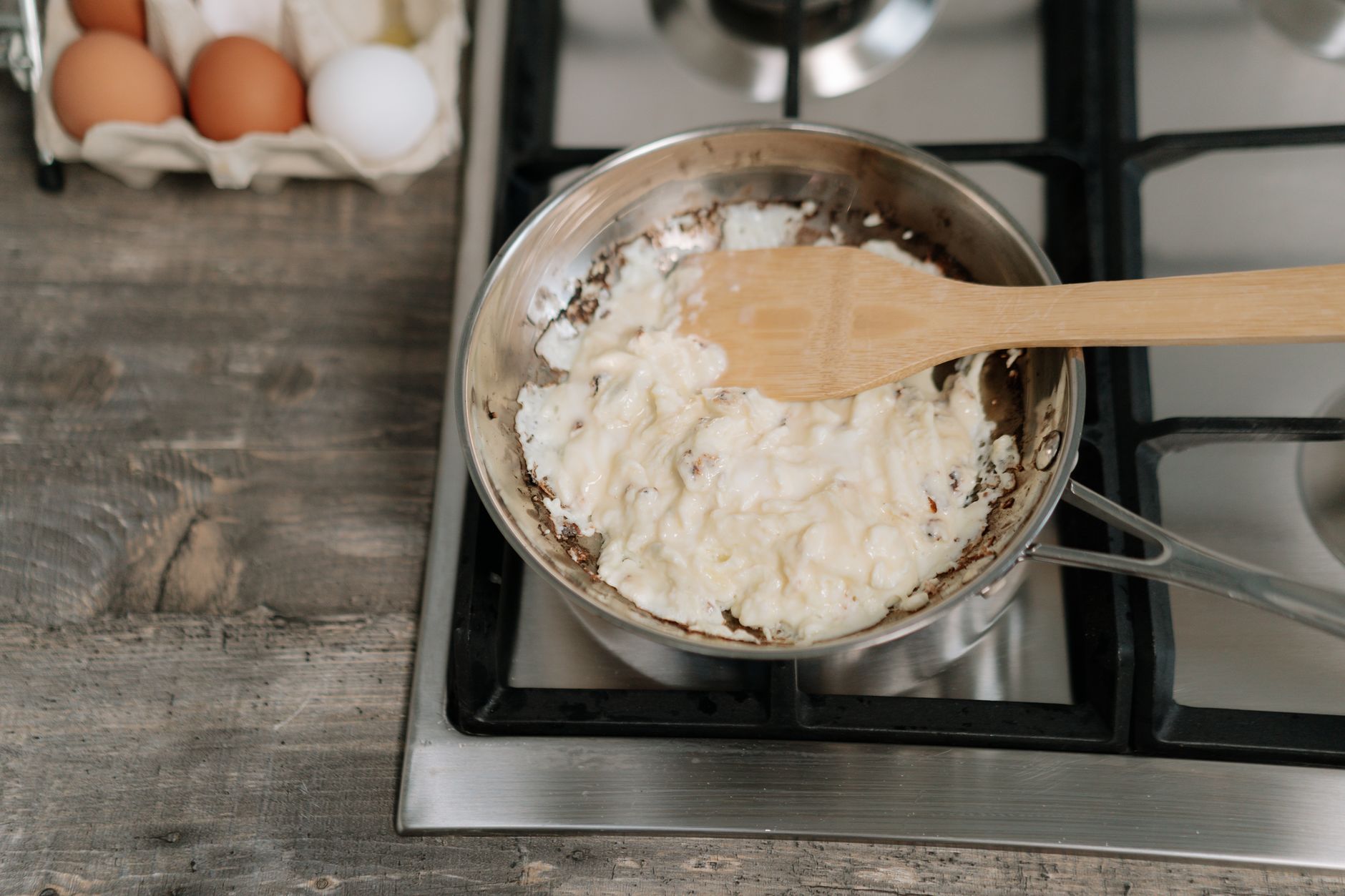
Mistake one: high heat. I was cranking the burner to medium-high because I wanted fast eggs. High heat makes the proteins seize up tight and squeeze out water. That is where the rubber texture and that sad puddle of liquid on the plate come from.
Mistake two: scrambling in the pan. I would crack eggs into the pan, let them set for a bit, then stir. By the time I stirred, parts were already overcooked.
Mistake three: cooking until they looked “done.” Eggs keep cooking after they leave the pan. If they look fully cooked in the skillet, they will be dry by the time you sit down.
The Method That Works Every Time
Earl’s method — which I have now used maybe three hundred times — goes like this:
- Crack your eggs into a bowl. Add a pinch of salt and a splash of milk or water. Whisk until the yolks and whites are fully combined and a little frothy.
- Put a non-stick pan on low heat. Add a pat of butter. Let it melt slowly — do not let it sizzle or brown.
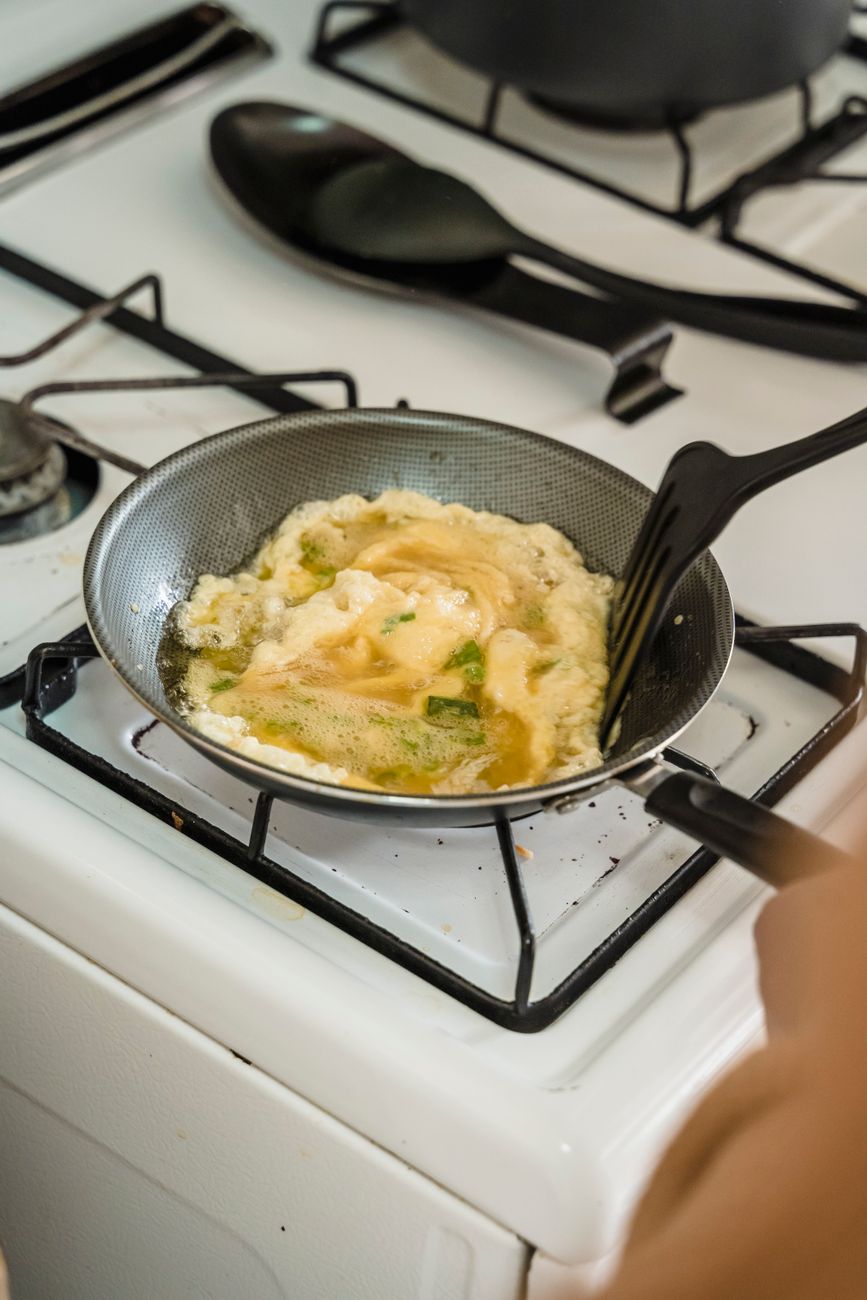
- Pour in the eggs. Now here is the part that takes patience: do not touch them for about 30 seconds. Let the bottom just barely set.
- Use a silicone spatula to push the eggs gently from the edges toward the center. Do not chop. Do not scramble aggressively. Just slow, sweeping pushes.
- As curds form, keep folding. The whole process takes about 3 to 4 minutes. When the eggs look slightly wet but not runny, take them off the heat.
Plate immediately. They will finish cooking from residual heat on the way to the table.
One More Thing Earl Told Me
As I was leaving, Earl called out: “Oh, and use the good butter. The stuff in the foil wrapper, not the tub.” He was right. Kerrygold or any European-style butter with higher fat content makes a difference you can taste. The eggs taste richer, not greasy.
I have not ordered scrambled eggs at a restaurant since. Not because I am cheap — because mine are better now.
Quick Summary: Low heat, whisk before pouring, slow gentle folds, pull off when still a bit wet — and use the good butter.