How to Clean Your Phone Screen Without Scratching or Streaking It
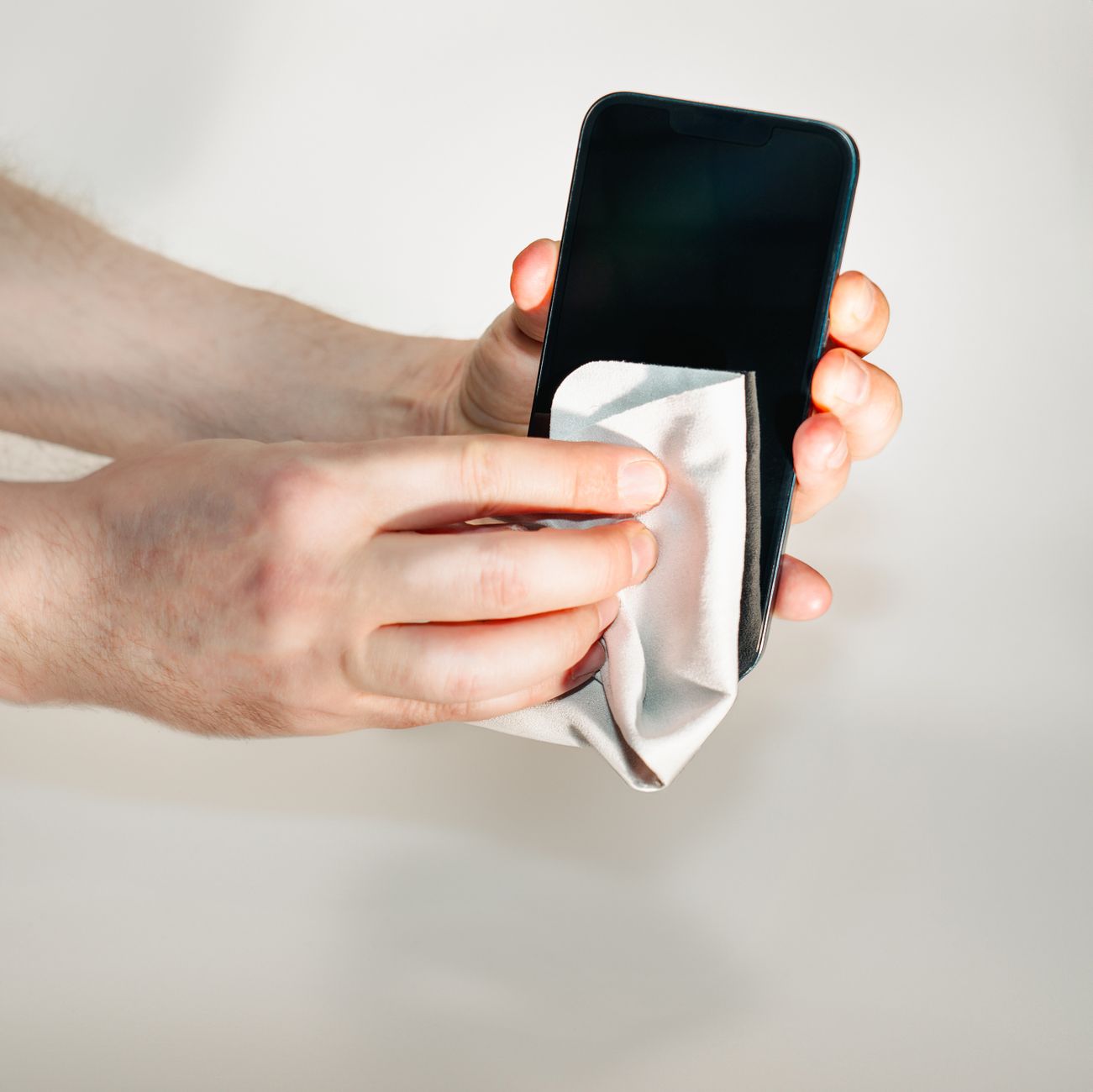
I used to clean my phone screen with my shirt. Everyone does. Then I noticed fine swirling scratches under bright light—hundreds of them. My shirt had tiny particles of dust and grit embedded in the fabric, and every wipe was sandpapering the oleophobic coating off the glass.
Once that coating is gone, your screen attracts fingerprints faster and feels rougher. You cannot reapply it easily. Prevention is the only real option.
What You Need
A clean microfiber cloth—the kind sold for glasses or camera lenses. Not the one that has been sitting on your desk collecting dust for three months. A fresh one, or one washed without fabric softener and air-dried.
Distilled water in a small spray bottle. Not tap water—tap water contains minerals that leave streaks. A gallon of distilled water costs about a dollar at any grocery store and lasts for years.
Optionally, 70% isopropyl alcohol mixed 50/50 with distilled water for disinfecting. Apple and Samsung both say this is safe for screens as long as you do not soak the device.
The Method
Turn off the phone. A black screen shows smudges and streaks better than a lit one.
Spray the cloth, not the screen. One light mist is enough. Never spray liquid directly onto the phone—it can seep into the speaker grille, charging port, or buttons.
Wipe in one direction. Circular wiping just moves oil around. Start at the top and wipe down to the bottom in straight overlapping strokes. Flip the cloth to a dry section and repeat.
Use a lens brush for the edges. Dust collects in the seam where the screen meets the frame. A camera lens brush with soft bristles cleans this out without scratching.
What Never to Use
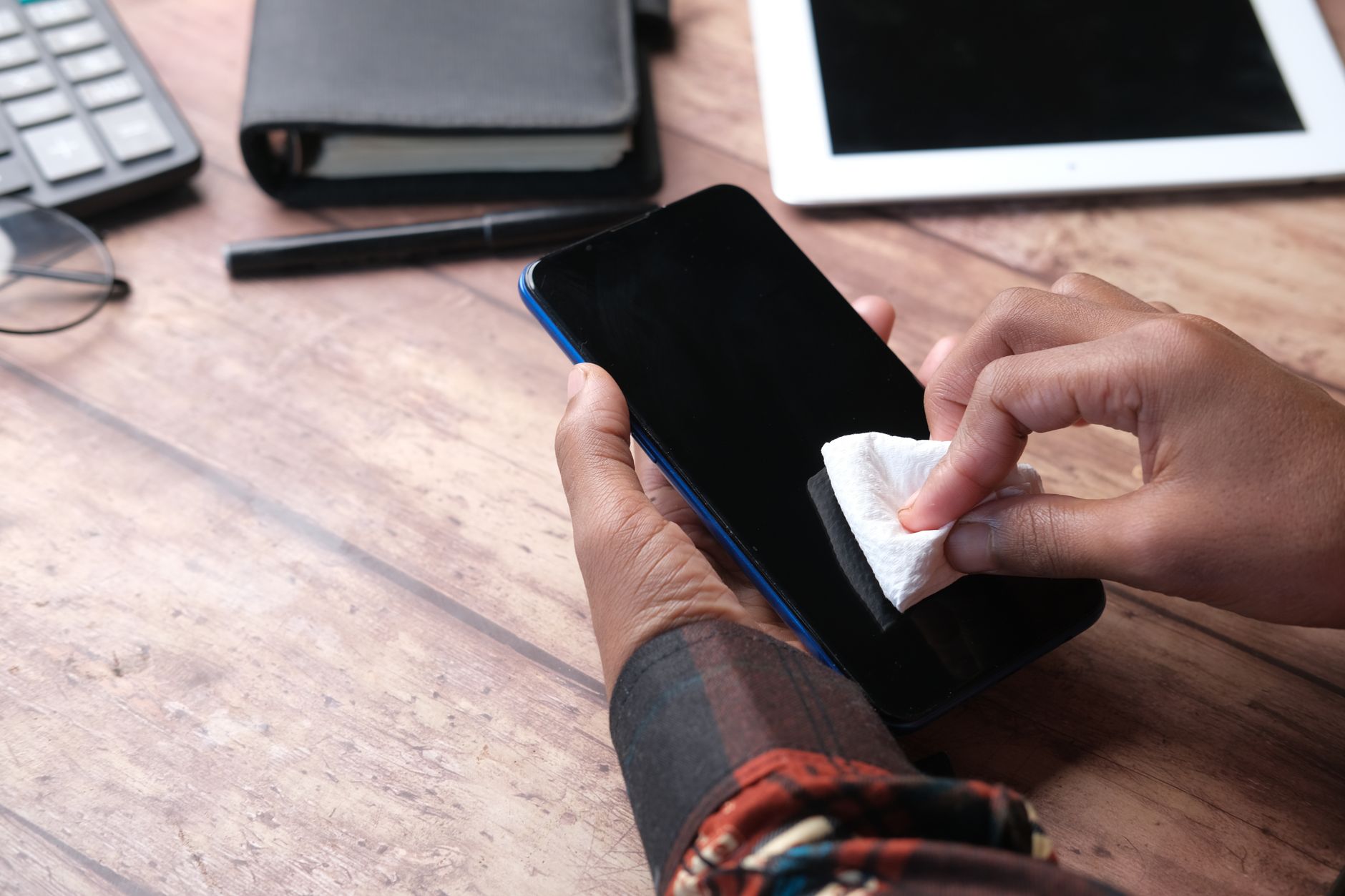
- Paper towels or tissues. Wood fibers are abrasive to glass coatings.
- Window cleaner. Ammonia strips the oleophobic coating.
- Compressed air. Can force dust deeper into the speaker mesh or blow out the earpiece seal.
- Vinegar. Acid etches the coating over time.
- Bleach or hydrogen peroxide. These oxidize the oleophobic layer and can discolor plastic phone bodies.
Protecting the Coating
If your screen is already a fingerprint magnet and water beads up unevenly, the oleophobic coating is worn. You can buy oleophobic coating kits online—they are a liquid you apply, let cure, and buff. Results vary. A tempered glass screen protector with a fresh oleophobic coating is usually the better move—it feels like new glass for about ten dollars.
📋 Quick Summary: Spray distilled water or 50/50 alcohol-water onto a clean microfiber cloth—never directly on the phone. Wipe in straight lines, not circles. Never use paper towels, Windex, or vinegar. Replace the oleophobic coating with a tempered glass screen protector when it wears off.