DIY Cleaning Products That Cost Pennies Per Use
I once spent nine dollars on a bottle of “natural” all-purpose cleaner that was, according to its own ingredient list, mostly water and vinegar. Nine dollars for something I could make for about forty cents. I finished the bottle and never bought it again.
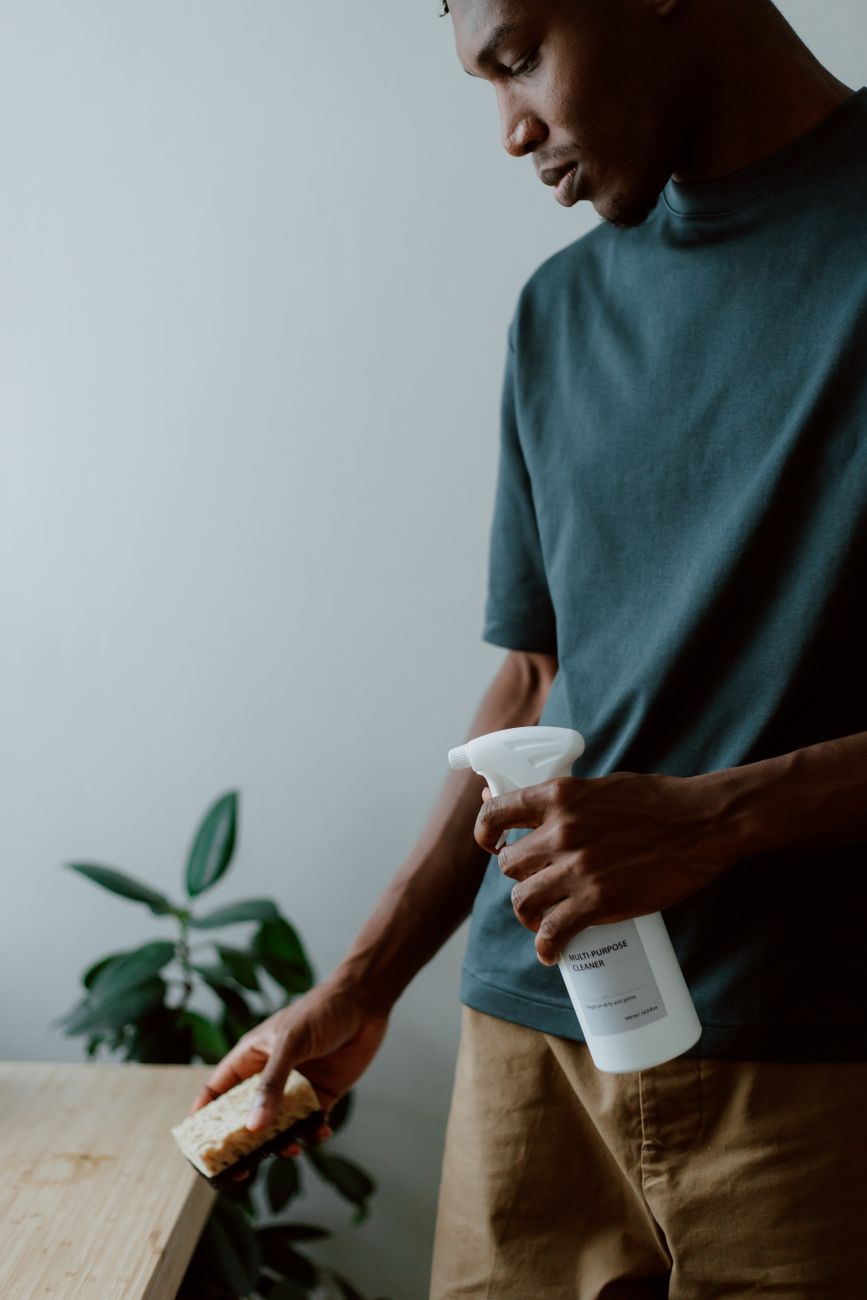
The three-ingredient all-purpose cleaner
Equal parts white vinegar and water in a spray bottle. Add a few drops of dish soap if you are cleaning greasy surfaces. That is it. Vinegar dissolves mineral deposits, cuts through light grease, and kills some bacteria. The smell dissipates as it dries.
Do not use this on stone, hardwood, or electronics — see article number seven in this batch for the full list of surfaces vinegar destroys. For everything else — countertops, sinks, tile, baseboards, cabinet fronts — it works as well as anything in a bottle.
Glass cleaner that does not streak
One cup rubbing alcohol, one cup water, one tablespoon white vinegar. The alcohol makes it evaporate fast — that is what prevents streaks. Commercial glass cleaner is basically this formula plus blue dye and a spray bottle. Use newspaper or a microfiber cloth instead of paper towels — paper towels leave lint.
Heavy-duty scrubbing paste
Baking soda and a splash of water mixed into a paste. Apply to baked-on oven grime, bathtub rings, sink stains. Let it sit for ten minutes. Scrub with a damp sponge or an old toothbrush. Rinse. The baking soda is abrasive enough to lift crud but too soft to scratch porcelain, ceramic, or stainless steel.
For extra power, add a few drops of hydrogen peroxide instead of water. The peroxide bleaches stains and fizzes through organic gunk. Wear gloves — it is not dangerous but it dries out skin.
Floor cleaner for any surface
A gallon of hot water, a quarter cup of white vinegar, a few drops of dish soap. That is the whole recipe. For wood floors, skip the vinegar and use a teaspoon of mild dish soap in hot water, and wring the mop until it is barely damp — standing water and wood floors are enemies.
What not to mix — ever
- Bleach and vinegar. Produces chlorine gas. It was used as a chemical weapon in World War I. You will feel it in your lungs immediately and it can send you to the hospital.
- Bleach and ammonia. Produces chloramine gas. Same category of dangerous. Many glass cleaners contain ammonia. Check the label before mixing anything with bleach.
- Bleach and rubbing alcohol. Produces chloroform and hydrochloric acid.
The rule is simple: do not mix bleach with anything except water. Not vinegar, not ammonia, not alcohol, not essential oils. Just water.
These five recipes replace about twelve different cleaning products from under my sink. Total cost for the ingredients: maybe ten dollars, and the vinegar and baking soda last for months. The spray bottles last forever.
Quick Summary: Vinegar + water = all-purpose cleaner. Alcohol + water + vinegar = streak-free glass cleaner. Baking soda paste = heavy-duty scrub. Never mix bleach with anything but water.