Spice Racks for Every Kitchen Size and Budget
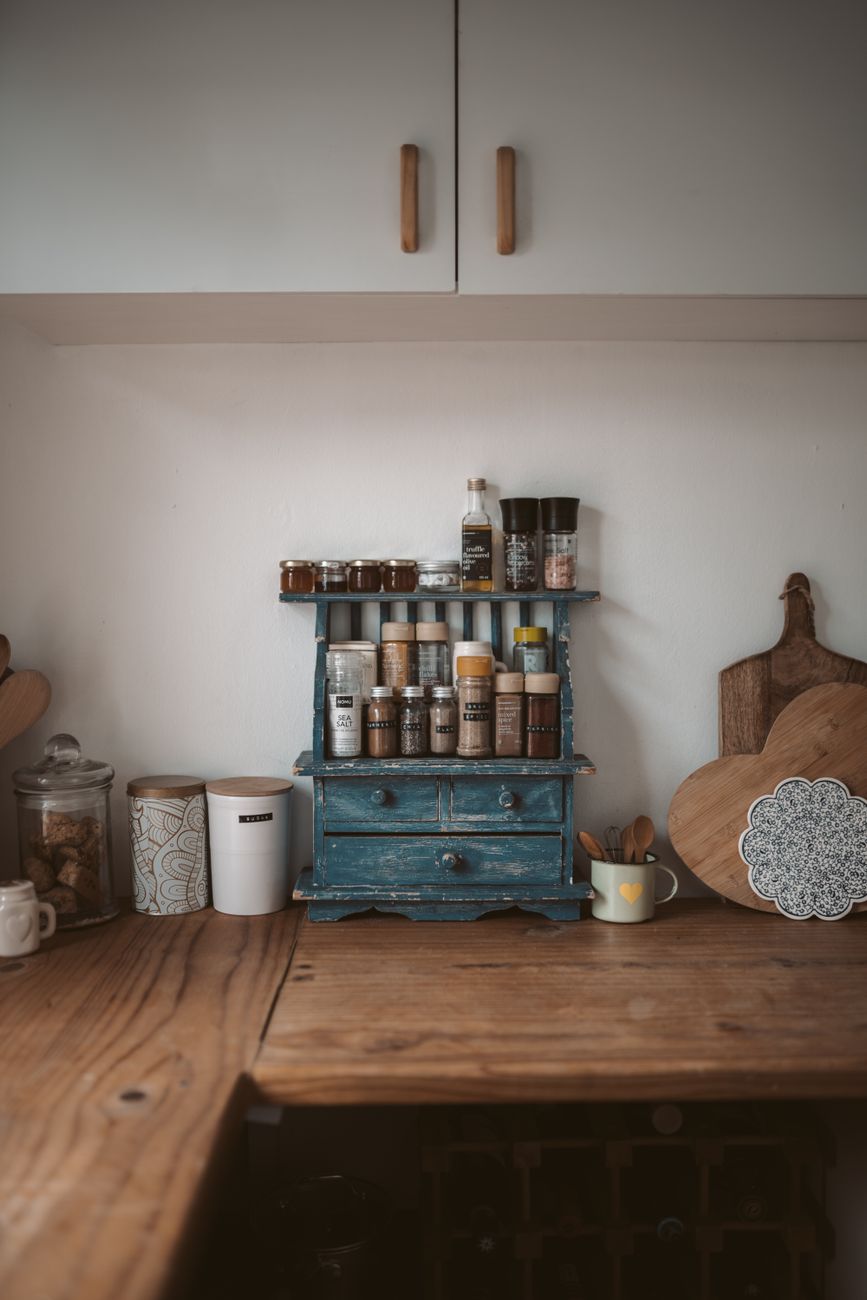
My spice “organization” for years was a pile of mismatched jars in a cabinet where I had to pull out seven things to find the cumin. I upgraded to an actual spice rack last year and the improvement in my cooking speed was immediate. But I also learned that the right rack depends entirely on your kitchen layout.
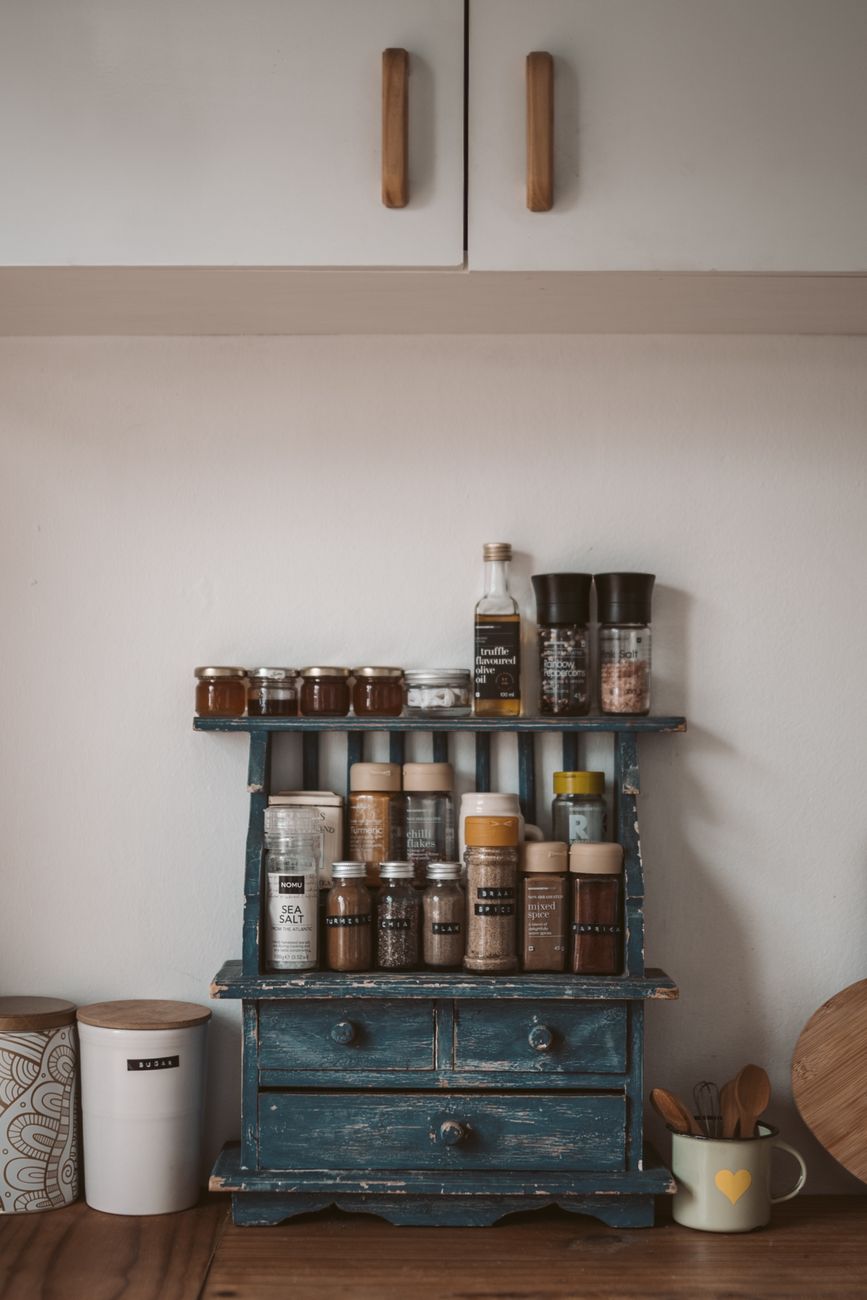
For small kitchens: the magnetic wall strip
If counter and cabinet space are tight, a magnetic wall-mounted strip with small metal tins uses the one surface every kitchen has empty: the wall. Mount it on the side of the fridge, on the backsplash, or on the inside of a cabinet door. The tins hold about a quarter cup of spice each which is plenty for home use. Labels on the bottom so you can read them from below.
I installed one on the side of my fridge for my twelve most-used spices. Grabbing cumin is now a one-second motion instead of a cabinet excavation. The tins are dishwasher safe when you need to switch spices. Total cost: about twenty-five dollars for a twelve-tin set with a magnetic backing strip.
For deep cabinets: the tiered shelf insert
If you have a dedicated spice cabinet but everything disappears behind everything else, a three-tier expandable shelf is the fix. The back row sits higher than the middle row which sits higher than the front row. You can see all three rows of spice jars at a glance. No more pulling out the garlic powder to reach the paprika.
Measure your cabinet depth before buying. Tiered shelves come in various widths and the most common mistake is buying one too deep for the cabinet so the door will not close. The shelf should be at least two inches shallower than your cabinet depth.
For drawer storage: the angled insert
If you have a spare drawer, a spice drawer insert with angled tiers holds jars on their sides at a readable angle. The labels face up when you open the drawer. This is the fastest system for cooking because every spice is visible and reachable in a single motion. The trade-off: it uses an entire drawer, which is a big commitment in a small kitchen.
A quality drawer insert runs between twenty and forty dollars depending on size. Cheaper ones are just flimsy plastic that slides around when you open and close the drawer. Look for one with rubber feet or a non-slip backing so it stays in place.
Matching jars: worth it or not?
A uniform set of glass jars looks beautiful and lets you buy spices in bulk bags (cheaper per ounce) instead of new jars every time. The downside: transferring spices from store jars to uniform jars takes time and you lose the expiration date. I use a label maker and write the date I transferred the spice on the bottom. Fresh ground spices lose potency after about six months so dating them matters.
Quick Summary: Magnetic wall strips for tiny kitchens, tiered shelf inserts for deep cabinets, angled drawer inserts for the fastest access, and uniform jars only if you are willing to label and date everything.