How to Make the Fluffiest Scrambled Eggs of Your Life
My scrambled eggs used to be sad. Rubbery. Gray around the edges. The kind of eggs that sit on a breakfast buffet for three hours and nobody touches.
I made them that way for ten years. Then I stayed at a bed and breakfast in Vermont where the owner made eggs that were light, creamy, almost mousse-like. I asked what her secret was. She laughed and said there were four secrets, actually.
Here they are.
Secret 1: Crack Into a Bowl, Not the Pan
Seems obvious. It is not. Most people crack eggs directly into a hot pan and then scramble them with a spatula. That creates uneven cooking — the parts touching the pan set immediately while the rest is still raw.
Crack all your eggs into a bowl first, add a splash of milk or cream, and whisk until uniform. No white streaks. The mixture should be one color.
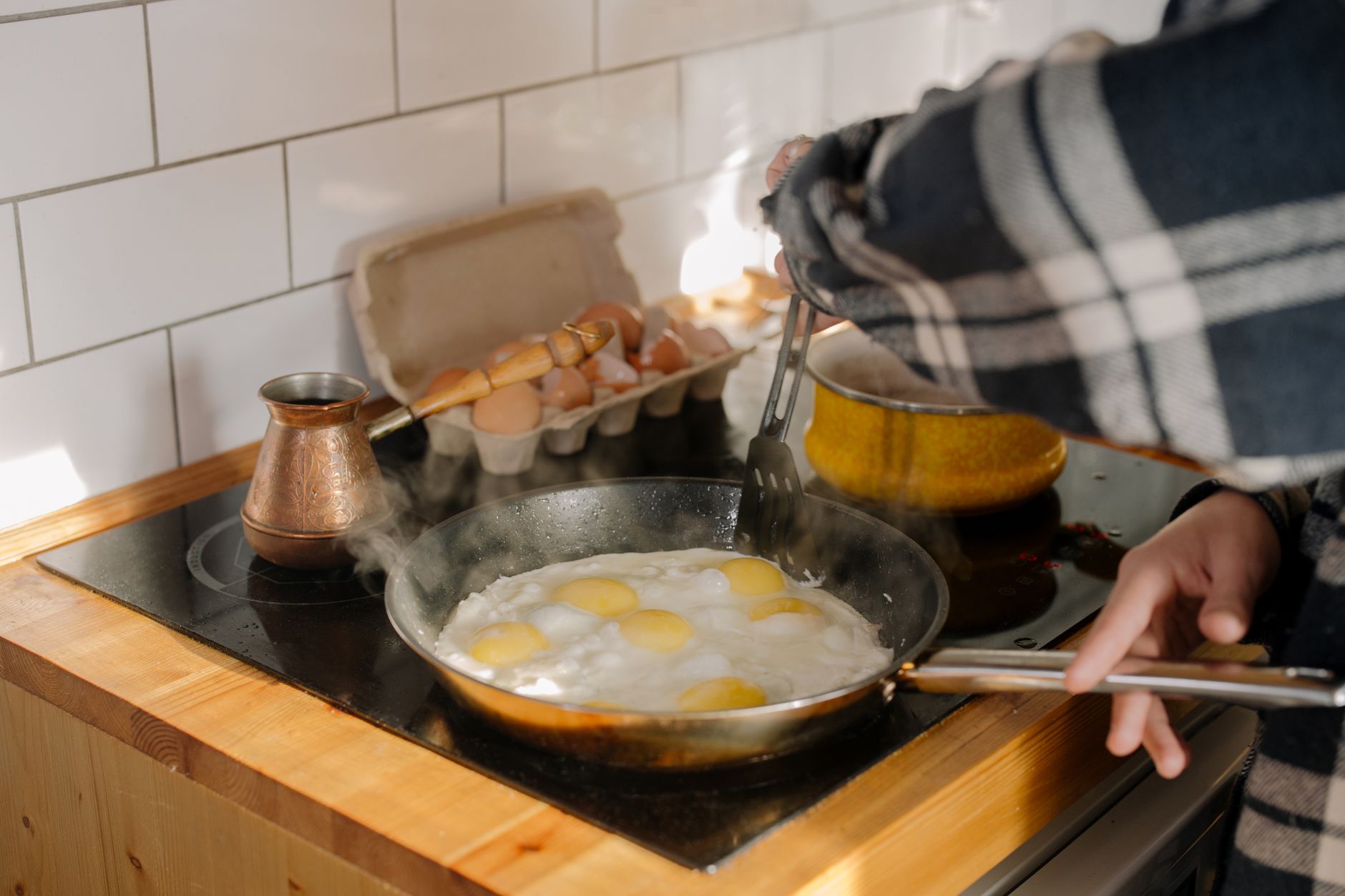
Secret 2: Low Heat Only
This was my biggest mistake for years. Scrambled eggs cook best on low to medium-low heat. High heat makes the proteins seize up fast, squeezing out moisture and creating that rubbery texture. Low heat gives you time to move the eggs around and build soft curds.
It takes longer — maybe 5-7 minutes instead of 2 — but the difference is night and day.
Secret 3: Constant Gentle Movement
Push the eggs from the edges toward the center with a silicone spatula. Fold, do not stir. You want large, soft curds, not a broken-up scramble. Take the pan off the heat for 10 seconds if things are moving too fast. Put it back. Repeat. This on-off method gives you total control.
Secret 4: Pull Them Early
Eggs keep cooking after you take them off the heat. Pull the pan when the eggs still look slightly wet. By the time you plate them and walk to the table, they will have finished setting. If they look “done” in the pan, they will be overdone on the plate.
I did not believe this until I tried it. Now I pull them when they are about 85% set. They finish perfectly every time.
Quick Summary: Whisk eggs with a splash of cream, cook on low heat with constant folding, and pull them off the heat when they still look slightly wet — carryover cooking finishes them perfectly.