Why Your Eyes Get Dry at Night and What Actually Helps

I used to wake up with eyes so dry they felt like sandpaper. Rubbing them made it worse, and the first hour of the morning was a squint fest. I blamed the weather, my age, everything except the actual cause.
Turns out nighttime dry eye has a few specific causes, and most of them are fixable.
Why your eyes get dry at night
Your eyes naturally produce fewer tears while you sleep, since you are not blinking to spread them around. That is normal. But a few habits make it worse: staring at screens all day, sleeping with the fan or AC blowing on your face, and not drinking enough water.
The screen connection
This one hit me hard. Staring at a screen cuts your blink rate in half. Fewer blinks means less tear spread, so your eyes go into the night already dry. The strain builds all day and peaks while you sleep.
The fix is the 20-20-20 rule: every 20 minutes, look at something 20 feet away for 20 seconds. It resets your blinking and gives the tear film a chance to rebuild. It sounds too simple to work, but it helps more than any drop I have tried.
Use drops at the right time
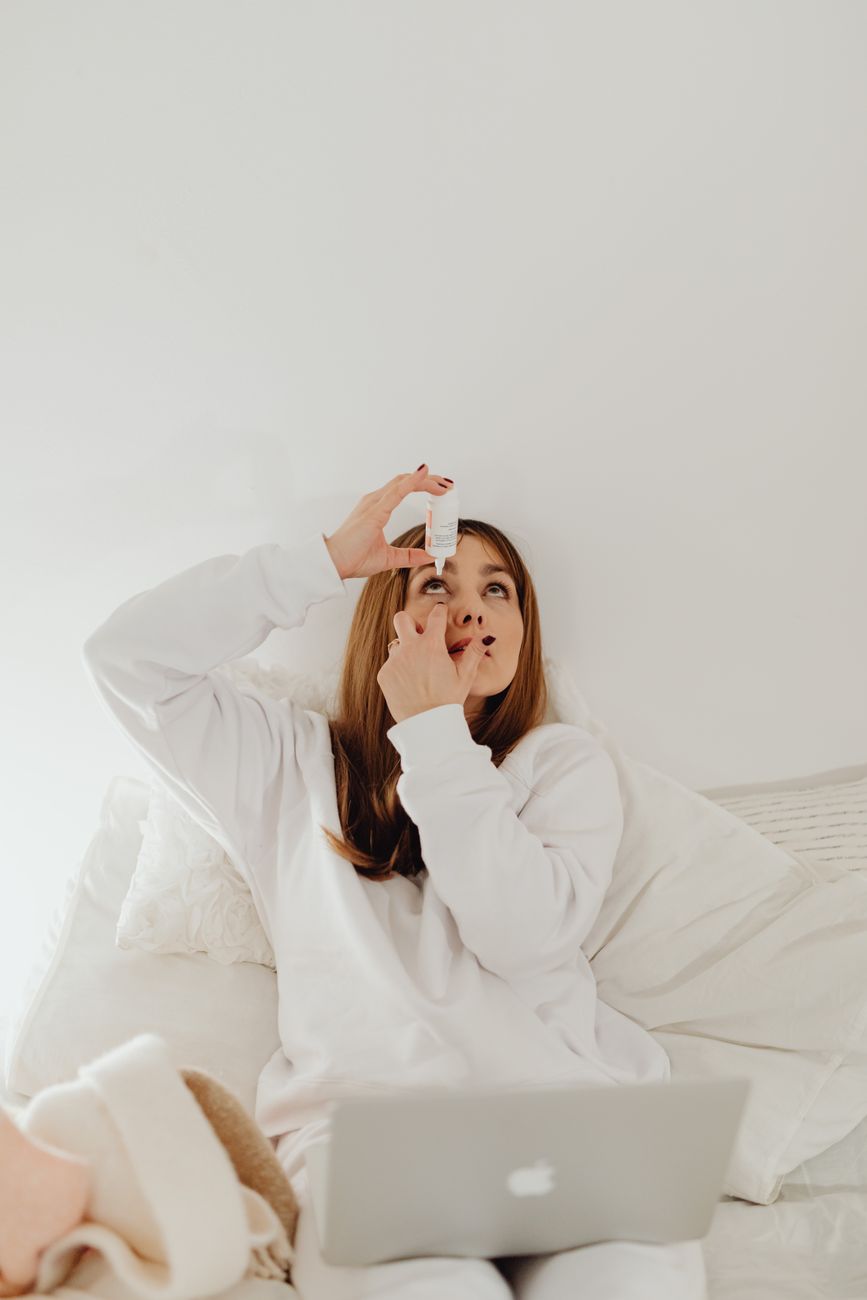
Preservative free eye drops are the ones to use at night. Drops with preservatives can irritate your eyes when used frequently. Put them in 15 to 30 minutes before bed, not right as you lie down. That gives the drops time to coat the eye before your blink rate drops.
Warm compresses for the win
The oil glands in your eyelids keep tears from evaporating. When they clog, your tears dry out faster. A warm compress for 5 to 10 minutes before bed loosens the oil and improves your tear film. I use a clean washcloth soaked in warm water. The difference after a week is real.
Check your bedroom setup
If a fan or air conditioner blows directly at your face all night, it is evaporating your tears while you sleep. Angle the fan away or point it at the ceiling. A humidifier in the bedroom helps too, especially in winter when heating dries the air.
Stay hydrated through the day
Dehydration shows up in your eyes first. Water through the day keeps your tear production normal. Chugging a glass at bedtime does not work the same, your body needs steady hydration, not a bedtime dump.
When to see an eye doctor
If your eyes stay dry despite all this, or if you also have redness, pain, or blurry vision, get an eye exam. Chronic dry eye can be a treatable condition, and an optometrist can prescribe drops that work better than anything over the counter.
Quick Summary: Blink more during screen time, use preservative free drops before bed, apply a warm compress, and point the fan away from your face.
My mornings are a lot less squinty now. The warm compress was the game changer for me, it took about four days to notice. Small habit, big difference.