The Epsom Salt Foot Soak That Cures Sore Feet After a Long Shift
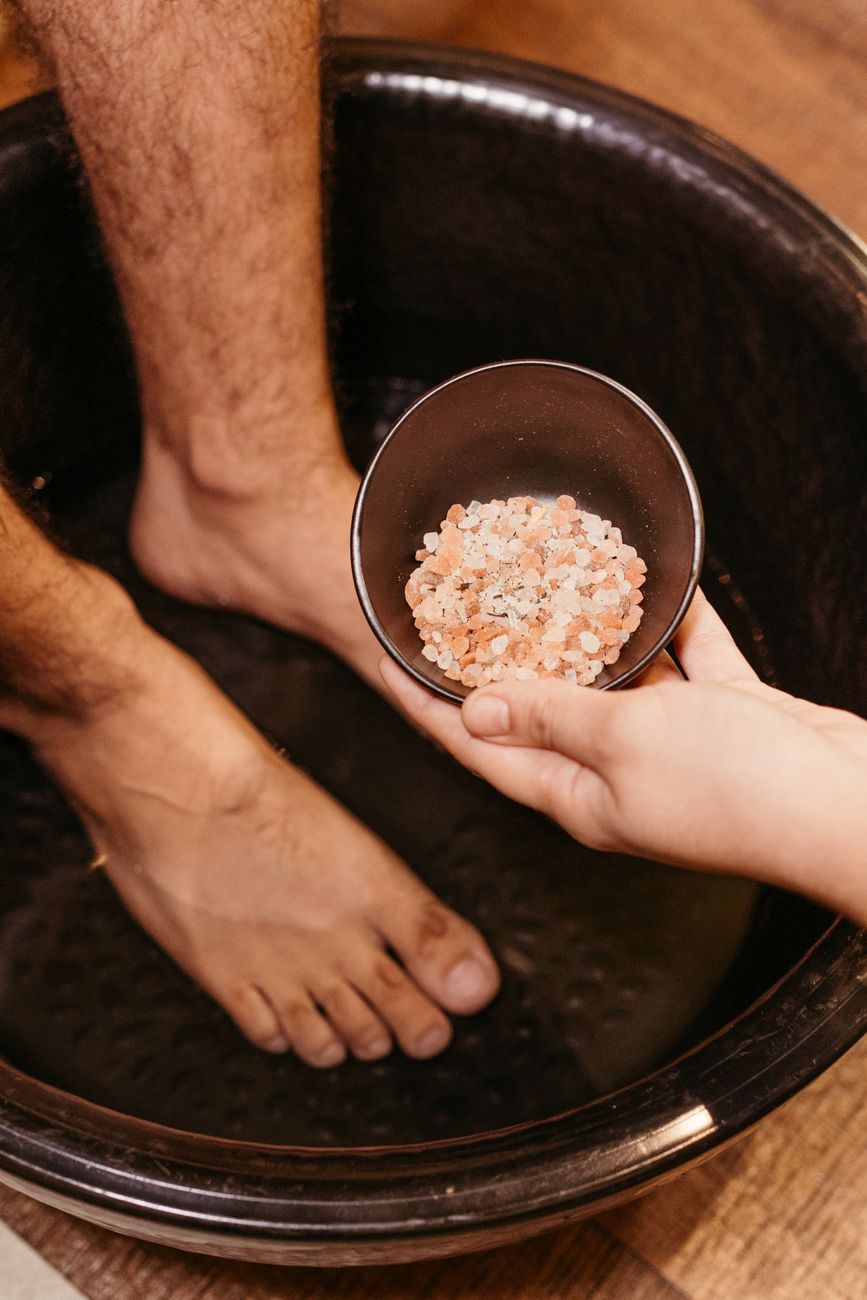
I worked retail through college. Twelve-hour shifts on concrete floors. By hour ten, my feet would throb so badly I would sit in my car after clocking out and just stare at the steering wheel for five minutes before I could bring myself to push the clutch.
My grandmother—who spent forty years as a nurse on hospital floors—told me about Epsom salt soaks. She was right, but I was doing it wrong for the first year. The water temperature is what makes or breaks it.
What Epsom Salt Actually Does
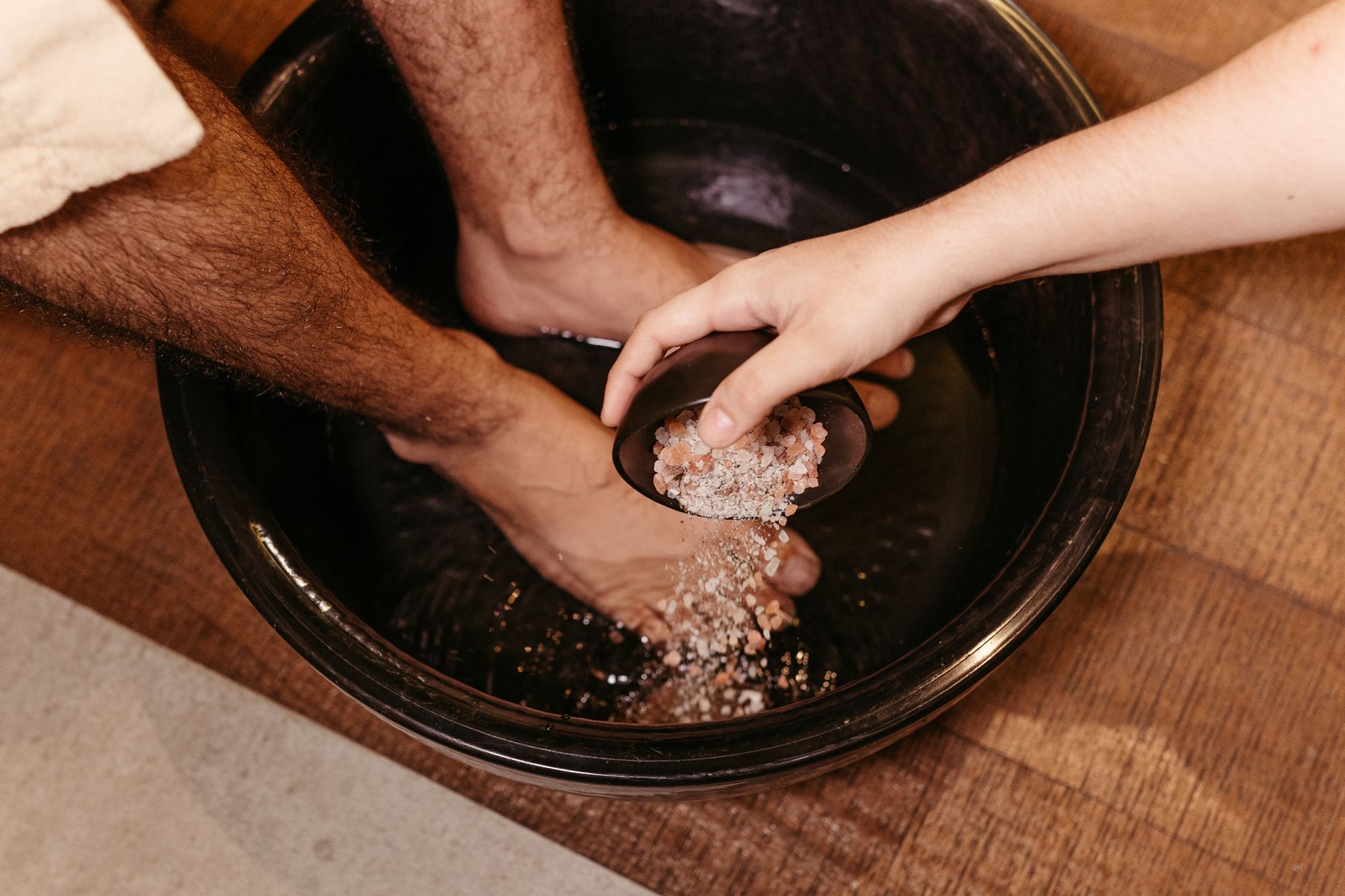
Epsom salt is magnesium sulfate. When dissolved in warm water, the magnesium absorbs through your skin—the evidence for this is debated, but the relief is real regardless of mechanism. More importantly, the warm water itself increases blood flow to your feet, which helps flush out the metabolic waste products that build up in muscles during long periods of standing.
The sulfate component may help reduce inflammation. Combined with the buoyancy of water (which takes pressure off your joints), a soak provides genuine physiological relief—it is not just a placebo.
The Right Way to Soak
Water temperature matters most. You want it as hot as you can comfortably stand—around 100°F to 104°F. Not scalding. Test with your wrist, not your fingers. If you cannot keep your feet in for more than a few seconds, it is too hot.
Half a cup of Epsom salt per gallon of water. For a standard dishpan or foot bath that holds about two gallons, use a full cup of salt. Stir until it dissolves completely. Undissolved crystals at the bottom feel like walking on gravel.
Soak for twenty minutes. Less than that and you do not get the full circulatory benefit. More than thirty minutes and your skin starts to prune and soften to the point where friction becomes a problem.
The Upgrade: Contrast Soaking
If your feet are actively swollen—not just sore—alternate between the hot Epsom soak and a basin of cold water. Three minutes hot, one minute cold, repeat three times. The hot-cold cycle creates a pumping effect in your blood vessels that actively reduces swelling. This is what athletic trainers do for sprained ankles.
After the Soak
Dry your feet thoroughly, especially between the toes. Apply a thick moisturizer while the skin is still warm and slightly damp—it absorbs better. Put on clean cotton socks. Your feet will feel lighter within ten minutes of taking them out of the water.
Do not soak if you have open cuts, blisters, or diabetic neuropathy—warm water can worsen infections and you may not feel a burn if sensation is reduced.
📋 Quick Summary: Fill a basin with water as hot as you can stand, dissolve one cup of Epsom salt, and soak for twenty minutes. For swelling, alternate three minutes hot and one minute cold. Moisturize after drying.