My Kitchen Smelled Like a Morgue Until I Boiled This Two-Dollar Ingredient

My ex-girlfriend once told me my kitchen smelled like a morgue. She was being hyperbolic, but not entirely unfair. I had just cooked salmon the night before, and the fishy odor had settled into every surface, every curtain, every fiber of my being. I tried lighting candles. I tried boiling cinnamon sticks. I tried spraying a commercial odor neutralizer that mostly just smelled like a chemical factory had collided with a fish market.
Understanding the Problem
📸 Photo by 女子 正真 on Pexels
Nothing worked, and eventually I just stopped cooking fish. That was an overreaction, obviously, but I was young and overly sensitive to criticism about how my apartment smelled. It took me another two years to discover the solution, and when I did, I felt like an idiot for not trying it sooner.
Vinegar. Plain white distilled vinegar, the kind that costs two dollars for a gallon at any grocery store. Here’s why it works: most cooking odors, especially fish, are caused by alkaline compounds called amines. Vinegar is an acid, specifically acetic acid. When the acidic vinegar vapor encounters the alkaline amine molecules floating in your kitchen air, they neutralize each other through a simple acid-base reaction, and the odor-causing compounds literally cease to exist as odors. This is real chemistry, not an old wives’ tale.
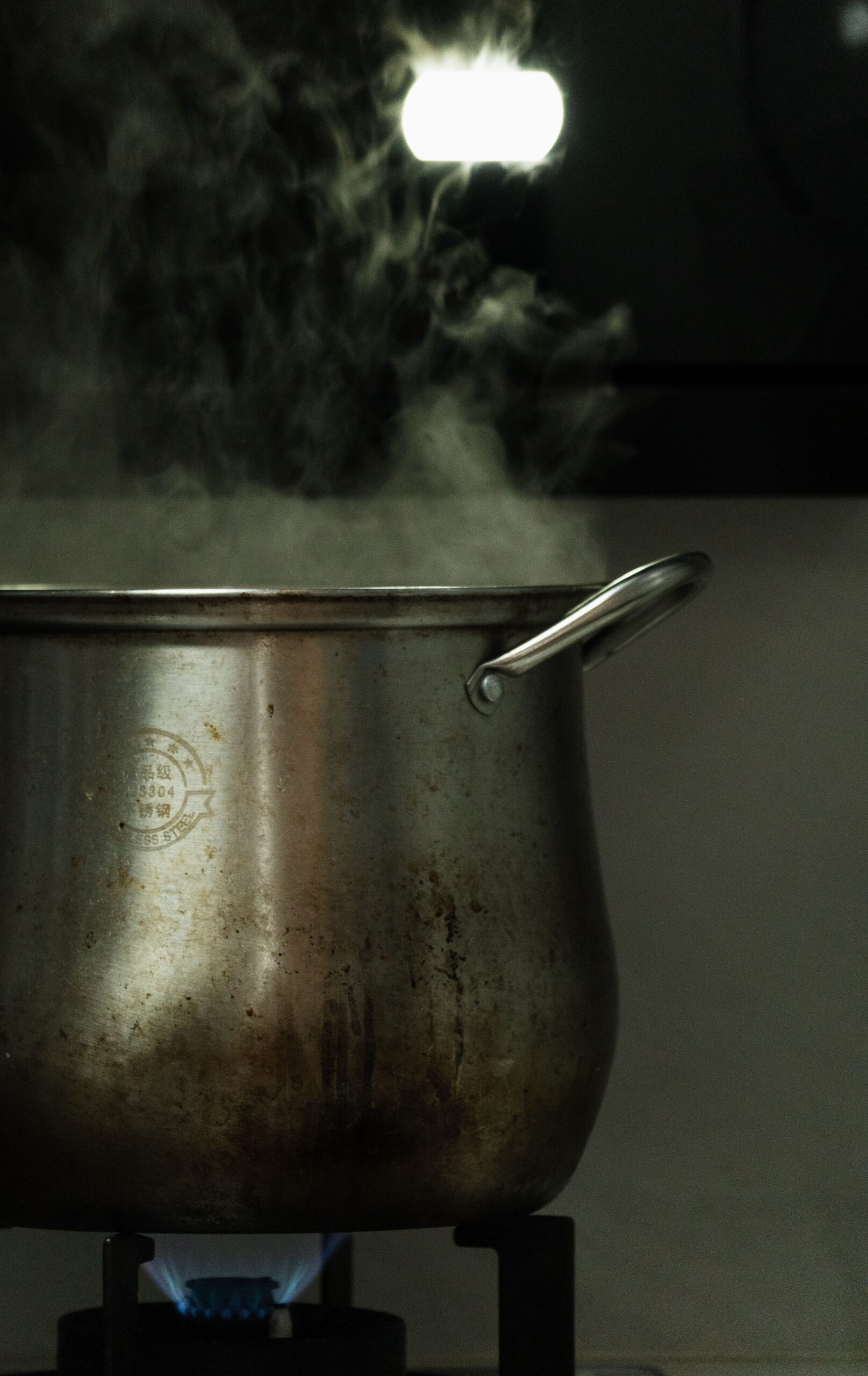
My method now is straightforward. While I’m cooking anything particularly aromatic, whether that’s fish, bacon, curry, or a pan-seared steak, I fill a small saucepan with about a cup of white vinegar and set it on a back burner over low heat. I let it simmer gently, not a rolling boil, just barely steaming. The vinegar vapor drifts through the kitchen and does its chemical work. Within fifteen or twenty minutes of finishing the meal, the cooking odors are gone, replaced by nothing. Vinegar itself has an odor, obviously, but that smell dissipates within minutes once the pan is removed from the heat.
The Proven Solution
For particularly stubborn odors, I pour vinegar into a shallow bowl and leave it on the counter overnight. By morning, even the strongest fish or curry smell is neutralized. I learned this trick from a friend who worked in a restaurant kitchen, where they would set out bowls of vinegar at the end of every shift to reset the kitchen for the next day.
Vinegar’s odor-fighting properties extend beyond the air. My microwave used to carry the ghost of every meal I’d ever reheated. A bowl of equal parts vinegar and water, microwaved for five minutes until the window is steamed up, loosens every bit of caked-on food residue. A quick wipe with a sponge, and the microwave smells like nothing. No perfumes, no chemical cover-ups, just clean.
Long-Term Prevention Tips
I also keep a spray bottle filled with a fifty-fifty mixture of vinegar and water under my kitchen sink. After cooking fish or bacon, I mist it over the stove area, countertops, and even into the air around the cooking zone. It settles on surfaces and neutralizes odor molecules on contact. The vinegar smell is gone within a few minutes, taking the fish smell with it.
The biggest surprise for me was learning that vinegar also works on smoke odors. If you’ve ever set off the smoke alarm searing a steak, you know that burnt smell can linger for days. Simmering vinegar overnight cuts through it completely.
My kitchen no longer smells like a morgue, and I cook salmon whenever I want. The ex-girlfriend is long gone, but the lesson stayed. Sometimes the most powerful solution in your kitchen costs two dollars and has been sitting in the back of your pantry for years.