Vacuum-Sealed Travel Bags That Actually Stay Compressed
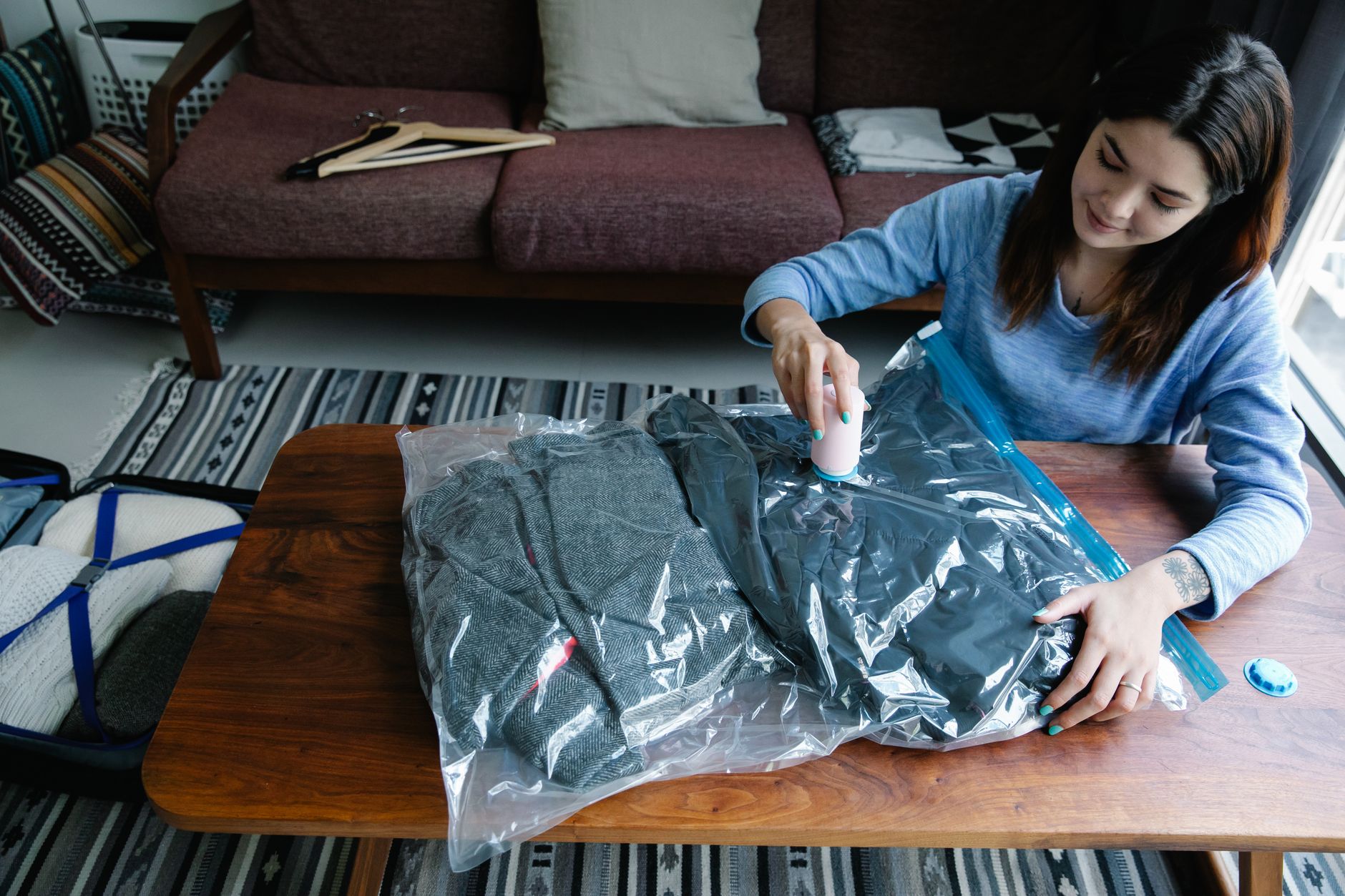
I bought a set of vacuum compression travel bags before a two-week trip to Europe. You know the kind — pack your clothes in, roll the air out, and suddenly a week’s worth of outfits fits in a carry-on. The first set I bought re-inflated by the time I got to the hotel. My carefully compressed sweaters were back to full size, and my suitcase barely closed for the rest of the trip.
The second set worked. The difference was not the brand name or the price — it was the valve design and the material thickness. I have since tested four different types and the good ones all share the same characteristics.

What makes a compression bag actually stay compressed
The most common failure point is the one-way valve. Cheap bags use a simple flap valve — a piece of plastic that overlaps a hole. It works when the bag is brand new but after a few uses, the plastic loses its shape and air seeps back in. Good bags use a double-layer valve or a screw-cap seal, which physically blocks air from entering. If the valve looks like a little circular cap you twist, it will probably hold. If it is just a flat strip of plastic, it will probably leak.
Material matters too. The best bags are made of thick nylon with TPU lamination, not thin polyethylene. Nylon is more puncture-resistant and the TPU coating is what actually holds the seal. The cheap ones feel like heavy-duty ziplock bags. The good ones feel like rain jacket material.
How to pack them so they do not re-inflate
- Do not overfill. Leave about three inches at the top for rolling. Overfilled bags put pressure on the seal and eventually force air back in.
- Fold clothes flat, do not wad them up. Folded items compress evenly. Wadded items create air pockets that your rolling cannot reach.
- Roll slowly from the bottom toward the valve. Rolling too fast traps air instead of pushing it out.
- Double-check the seal by pressing on the bag after closing. If you hear a hiss, it is not sealed.
Are they worth it for regular travel
If you routinely check a bag or fight with carry-on space limits, yes. They roughly halve the volume of bulky clothes — think sweaters, jackets, jeans. T-shirts and underwear do not compress much because they are thin to begin with. For a winter trip where half your suitcase is sweaters, compression bags are the difference between checking a bag and carrying on.
For business travel where you are packing thin button-downs and a single blazer, they are not necessary. Just roll your clothes normally. The compression benefit is minimal on thin fabrics.
📋 Quick Summary: Look for double-layer valves or screw-cap seals, thick nylon with TPU lamination, and leave room at the top when packing. Worth it for bulky winter clothes, not for thin fabrics.