How to Clean Greasy Kitchen Cabinets Without Damaging the Finish
I once scrubbed my kitchen cabinets with a “heavy duty degreaser” and stripped the finish off the doors above the stove. They went from wood-colored to… something else. My landlord was not thrilled. After that expensive lesson, I learned the right way to handle kitchen grease without destroying your cabinets in the process.
What you are actually cleaning off
The sticky film on kitchen cabinets is polymerized oil. When you cook, tiny droplets of oil float into the air and land on surfaces. Over weeks and months, heat and oxygen cause those droplets to bond together into a sticky, yellowish layer. It is not just “grease” — it is grease that has partially cured like paint. That is why plain water and a sponge does nothing.
The safe solution that actually works
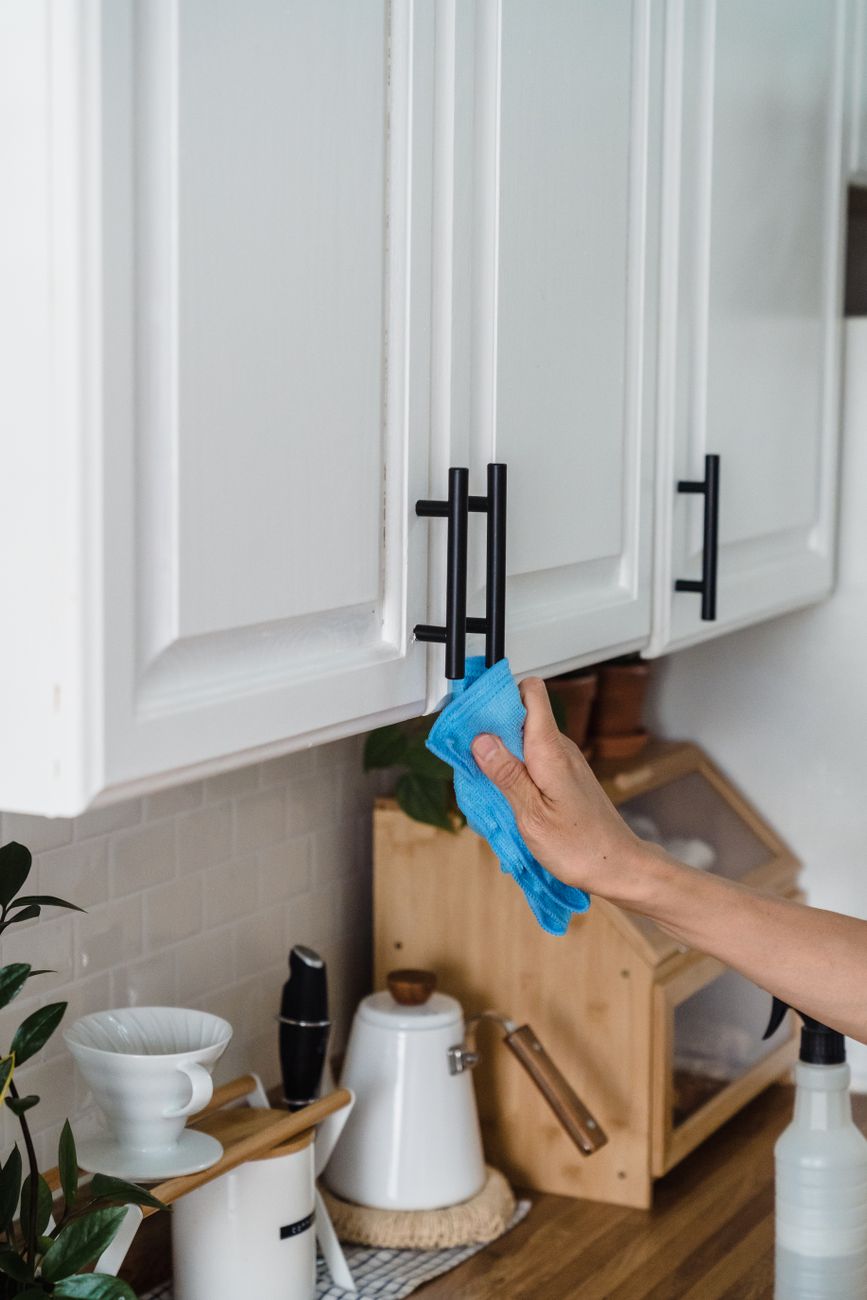
The best cleaner for wood cabinets is something you already own: dish soap and warm water. Specifically, a grease-cutting dish soap like Dawn. Mix a few drops into a bowl of very warm water — not hot enough to damage the finish, but warm enough to soften the polymerized oil. Use a microfiber cloth. Wring it out well so it is damp, not soaking. Too much water and it can seep into seams and swell the wood.
Wipe in sections. Do a two-foot area, then dry it immediately with a clean microfiber cloth. Do not let water sit on wood. This is the biggest mistake people make — they get the cabinets wet and walk away. By the time they come back, water has penetrated the finish and the wood underneath has started to swell.
For the really bad spots (above the stove)
If dish soap is not cutting it — and above the stove, it often won’t — mix a paste of baking soda and a few drops of water. Apply it with a soft cloth or sponge, rub gently in circles, then wipe off with a clean damp cloth and dry immediately. Baking soda is mildly abrasive but much gentler than commercial degreasers or anything with ammonia. It will not strip the finish unless you really attack it with a scouring pad.
Another option for stubborn areas: vinegar diluted 50/50 with water. The acid helps break down the grease. But test it first on an inside edge of a cabinet door to make sure it does not dull your particular finish. Some varnishes react poorly to vinegar.
What never to use
- Ammonia-based cleaners. They strip finish fast. The one I used on my rental.
- Abrasive scrub pads. Green scouring pads leave micro-scratches that collect even more grease later.
- Undiluted vinegar. Too acidic for some wood finishes.
- Steam cleaners. The heat and moisture can warp cabinet doors and loosen glue joints.
After cleaning, I wipe everything down with a dry cloth one more time. No residue, no water, no streaks. Twice a year is enough for most kitchens unless you fry food constantly.
📋 Quick Summary: Use warm water with a few drops of grease-cutting dish soap and a damp microfiber cloth. Dry immediately. For tough spots above the stove, a gentle baking soda paste works without damaging the finish. Never use ammonia or abrasive scrub pads.