Keep Noodles From Sticking Together After Cooking
I made spaghetti for a date once and it came out of the colander as one solid mass. The strands had fused into a pasta brick. I stood there poking at it with a fork while she watched. We dated for six more months after that so I guess it wasn’t a dealbreaker, but I still remember the shame.
Noodles stick because of starch released during cooking. As the hot noodles sit, that starch turns into glue. The fix is about managing the starch, not adding oil to the water.
What actually works
Lots of water. At least 4 quarts per pound of pasta. More water dilutes the starch concentration so less of it coats the noodles. In a small pot, the water turns starchy fast and every noodle gets coated in it.
Reserve pasta water before draining. Scoop out a cup of the starchy water before you dump the rest. After draining, toss the hot noodles immediately with a splash of sauce and a splash of that pasta water. The starch in the water helps the sauce cling to the noodles and keeps them from sticking while you finish plating.
Rinse only for cold dishes. For pasta salad or cold noodle dishes, rinse with cold water to stop cooking and wash off surface starch. For hot pasta dishes, never rinse — you’re washing away the starch that helps sauce stick.
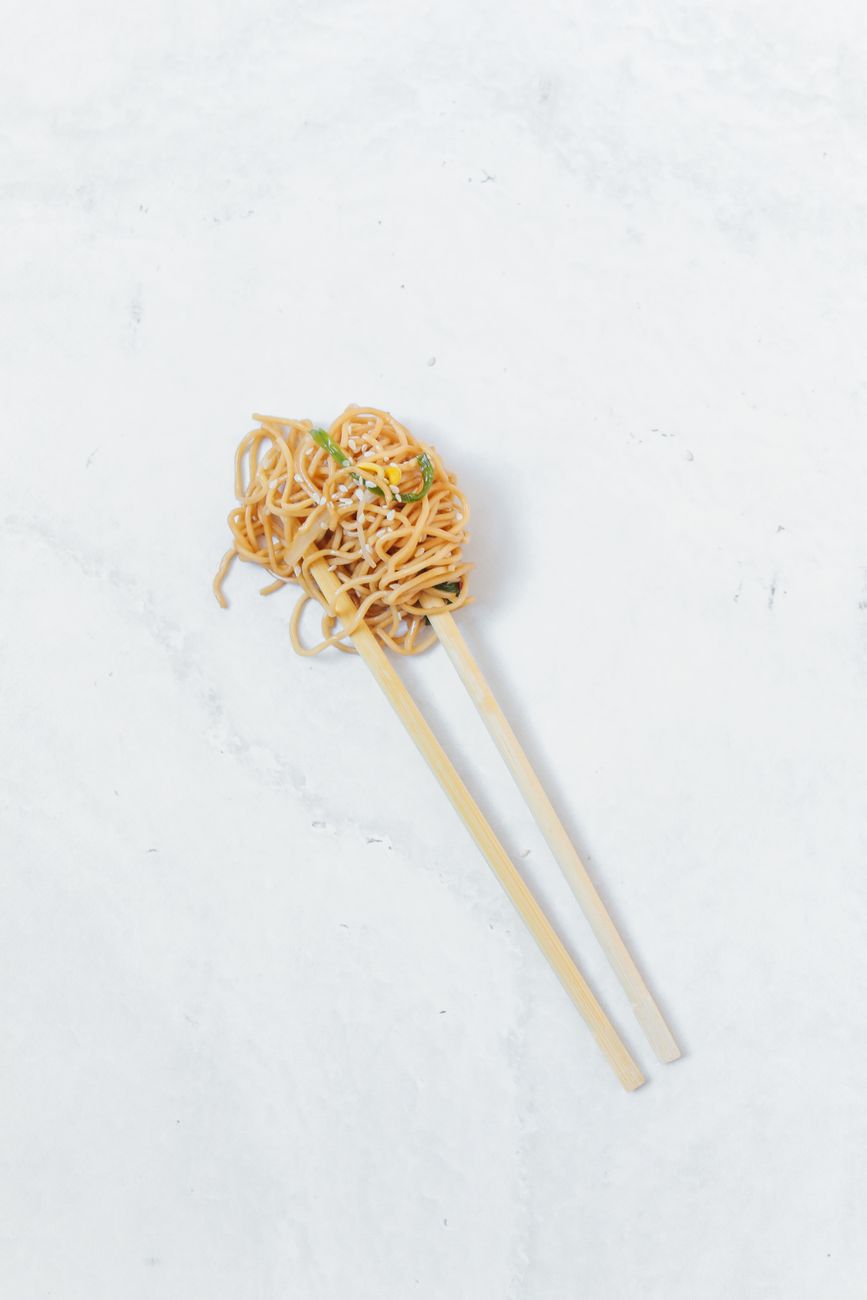
For Asian noodles (rice noodles, udon, soba): these have different starch profiles and benefit from a quick rinse in cold water after cooking, then a toss in a tiny amount of sesame oil to keep them separate.
Quick Summary: Use lots of heavily salted water, skip the oil, reserve pasta water before draining, and toss hot noodles with sauce plus pasta water immediately. Rinse only for cold noodle dishes.