Natural Easter Egg Dyes From Your Kitchen
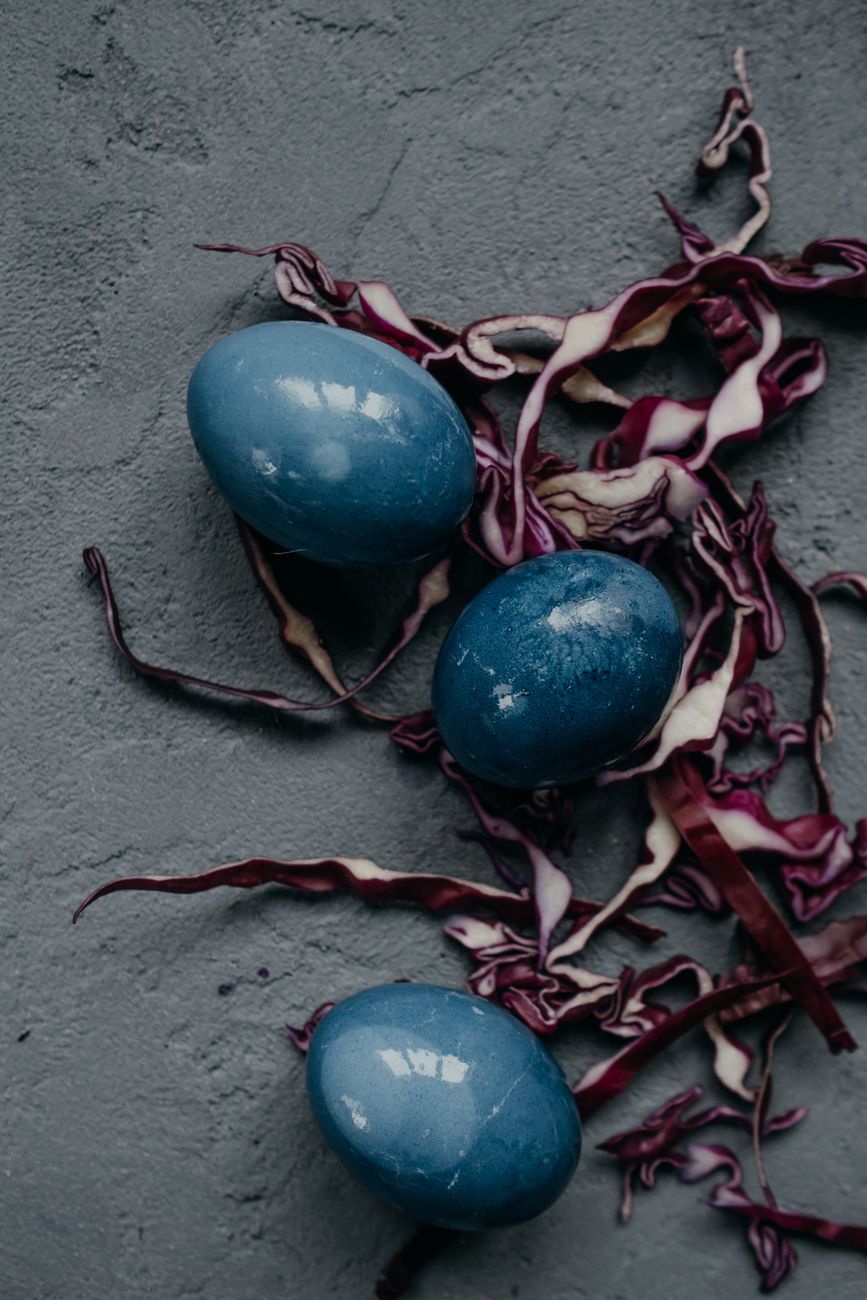
I grew up with the PAAS tablets — you drop them in vinegar, they fizz, you dip the eggs, they come out in six unnatural shades of neon. I loved them. But a few years ago I tried dyeing eggs with food scraps from my kitchen just to see if it would work. It worked better than I expected. The colors were softer and more interesting — muted blues, dusty pinks, deep golden yellows. They looked like something from a farmhouse kitchen, not a Walmart Easter aisle.
Here is what I used and what colors they produced.
The Basic Method
Natural dyeing is a two-step process: make the dye bath, then soak the eggs. Every color follows the same pattern:
- Chop or mash your dye material. Two cups of chopped material per quart of water is a good ratio.
- Add the material to a pot with water and two tablespoons of white vinegar. The vinegar is not optional — it fixes the color to the eggshell.
- Bring to a boil, then simmer for thirty minutes. The water will turn deeply colored. Strain out the solids.
- Let the dye cool to room temperature. Submerge hard-boiled eggs. Soak for at least thirty minutes — longer for deeper color. Overnight in the fridge gives the richest results.
My Color Results
| Color | Ingredient | Result |
|---|---|---|
| Yellow | Turmeric (2 tbsp powder) | Bright golden yellow — the most vivid natural dye |
| Orange | Yellow onion skins | Warm terra cotta orange — my favorite |
| Pink/Red | Beets, chopped | Dusty pink to deep rose depending on soak time |
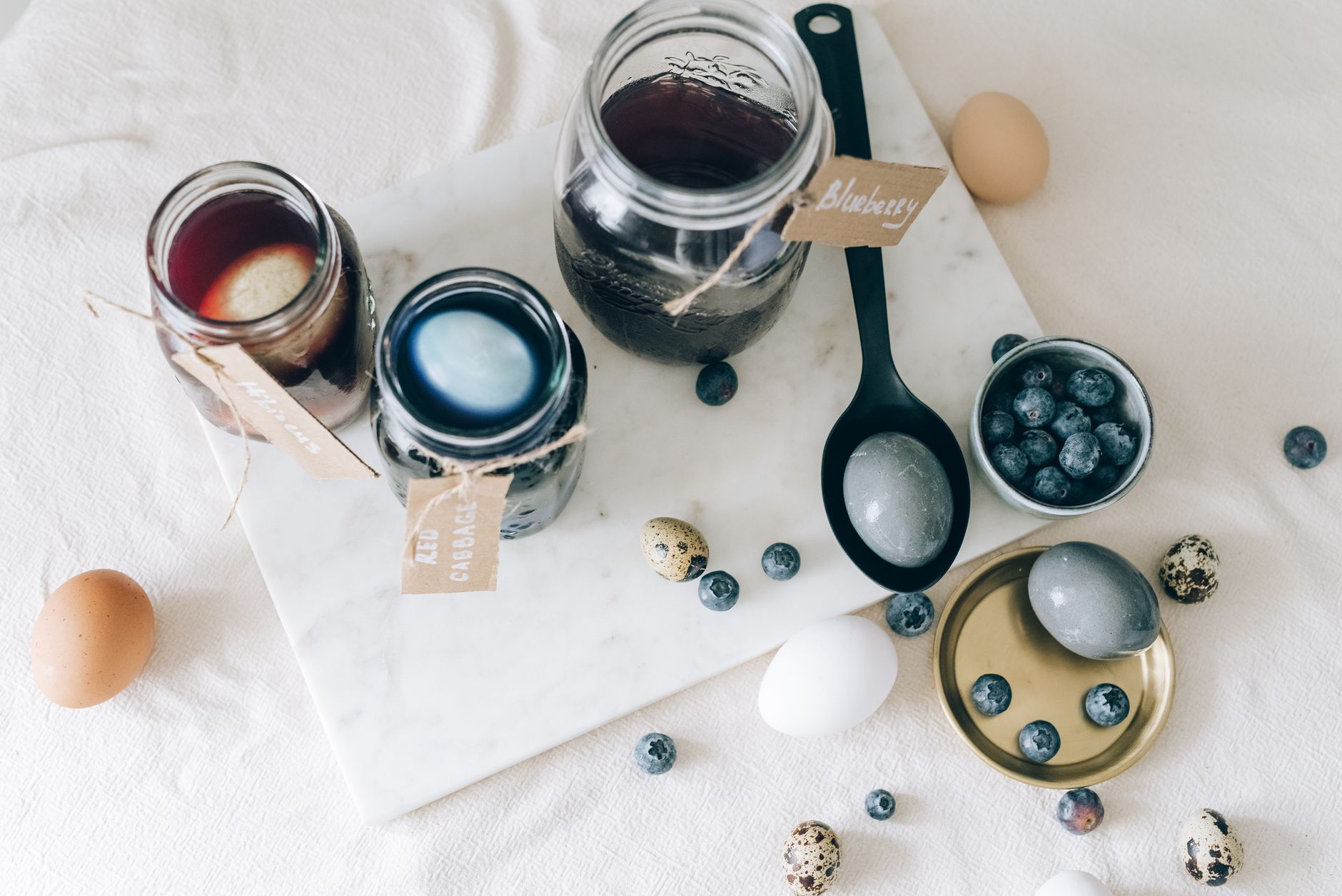
| Blue | Red cabbage, chopped | Surprise — red cabbage makes blue dye |
| Purple | Blueberry juice or grape juice | Soft lavender to deep purple |
| Brown | Strong coffee or black tea | Rich brown — use for white eggs to get tan |
| Green | Spinach (lots of it) | Very pale green — the weakest natural dye |
What I Learned the Messy Way
Turmeric stains everything. Your hands, your counter, your pot, your soul. Wear gloves when handling turmeric dye. Use a non-porous pot — glass or stainless steel. My white enamel pot is still faintly yellow two years later.
Beet dye looks bright pink in the pot but dries several shades lighter on the egg. If you want a visible pink, soak overnight and do not rinse the eggs after. Just pat them dry gently.
Brown eggs take dye differently than white eggs. The colors come out richer and earthier. I actually prefer brown eggs for natural dyeing — they produce colors that look like they belong in a landscape painting.
Texture Trick
Wrap an egg in onion skins held in place with a rubber band or a piece of pantyhose before dyeing. The places where the skins touch the egg will create darker patterns. It looks like marbled paper. I did this with half my batch and those were the ones everyone reached for first.
Natural egg dyeing is slower and messier than the tablets. But the eggs look like actual objects of beauty rather than plastic toys. My kitchen smelled like turmeric and beets for a day. Worth it.
📋 Quick Summary: Simmer chopped food scraps in water with vinegar, strain, soak hard-boiled eggs. Turmeric for yellow, onion skins for orange, beets for pink, red cabbage for blue. Soak overnight for strongest color.