Aluminum Foil — I Finally Looked Up Which Side Faces Out
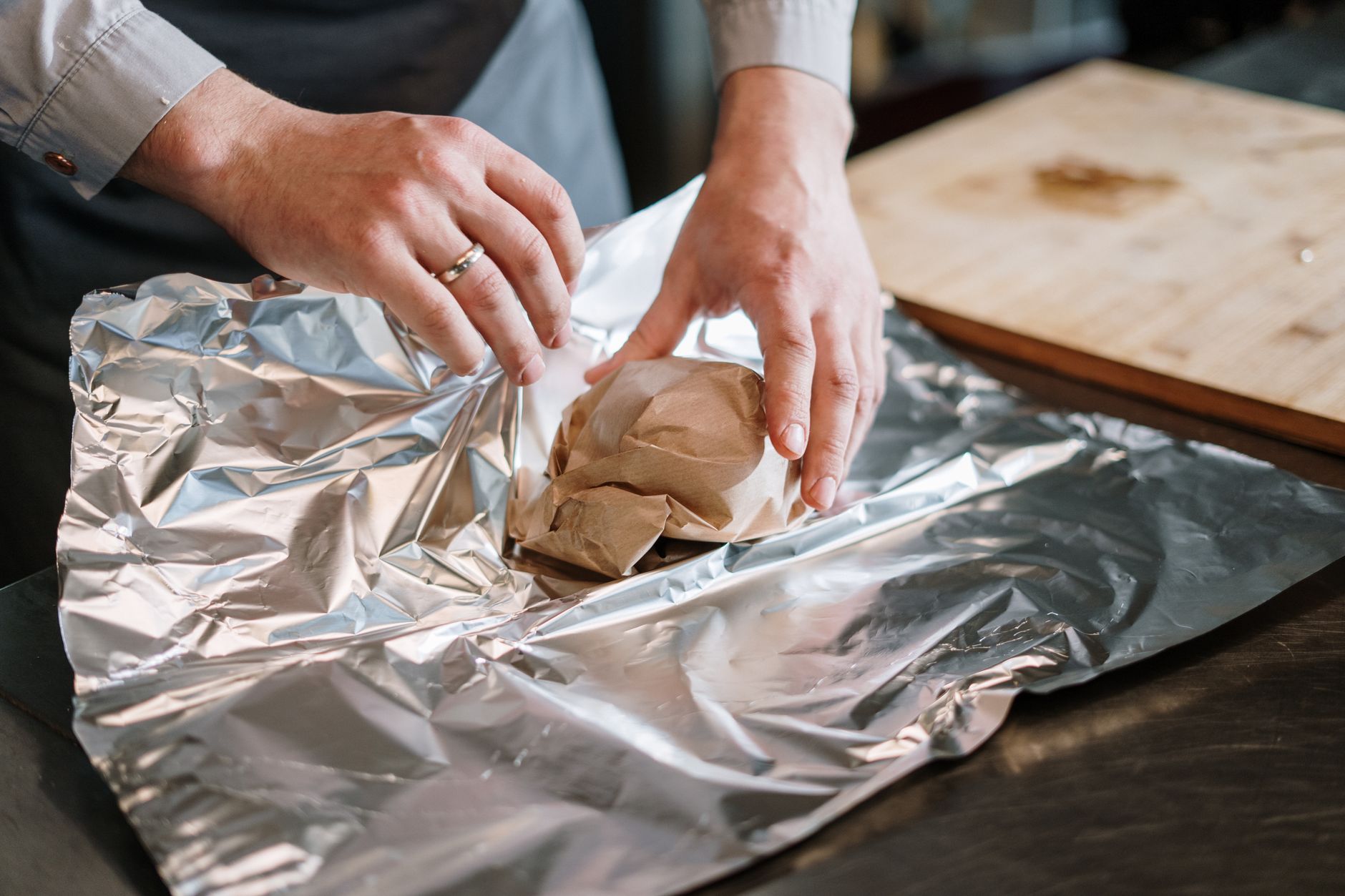
I have been using aluminum foil wrong for my entire adult life. I am not exaggerating. Every time I wrapped a potato or covered a casserole, I paused for half a second and thought wait, which side goes where? Then I picked a side at random.
Turns out, I was overthinking it. Like most people.
The Short Answer
It does not matter for cooking. The shiny side and the dull side are a manufacturing artifact, not a design feature. During production, two sheets of foil are pressed together — the sides that touch the rollers come out shiny, the sides that touch each other come out dull. That is it.

For standard cooking — wrapping food, lining pans, covering dishes — either side works exactly the same. The heat transfer difference between shiny and dull is so tiny you would need lab equipment to measure it.
When the Shiny Side Actually Matters
There is exactly one scenario where the side you face out makes a real difference: when you are trying to reflect heat.
Shiny surfaces reflect radiant heat better than dull surfaces. So if you are making a foil tent to keep something warm, put the shiny side facing inward toward the food (to reflect heat back). If you are trying to keep something cool, put the shiny side facing outward.
I tested this with two baked potatoes — one wrapped shiny-in, one shiny-out — and the shiny-in one stayed warm maybe 3 minutes longer. Not life-changing. But it is real.
Non-Stick Foil Is Different
If you buy the foil labeled “non-stick,” that foil does have a designated side. The dull side has the non-stick coating. Face that side toward your food. The packaging will tell you, but I missed that note for years because who reads foil packaging.
The Real Foil Hack Nobody Talks About
Crumple your foil before using it as a pan liner for bacon or roasted vegetables. The crumpled texture creates air pockets that let fat drain away from the food. Crispier bacon. Less greasy vegetables. This is the tip that actually changed my cooking, not the shiny-side debate.
So no. I was not “using it wrong.” I was just worrying about something that barely matters. The crumple trick though? I wish someone had told me that ten years ago.
📋 Quick Summary: The shiny vs. dull side does not matter for cooking — it is a manufacturing byproduct. Only non-stick foil has a designated side. Crumple regular foil for crispier results.