Kitchen Scales for Bakers Who Want Precision — Grams Matter More Than You Think
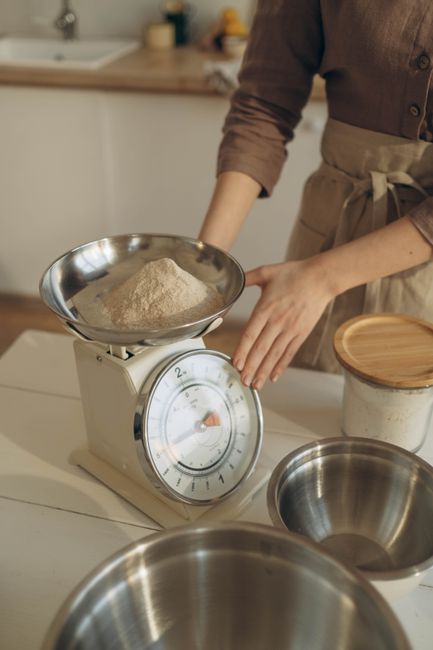
I baked chocolate chip cookies for years using measuring cups. Sometimes they were perfect. Sometimes they spread into flat puddles. I blamed the oven, the humidity, the phase of the moon — everything except the real problem, which was that my “cup of flour” varied by up to 30 grams depending on how I scooped it.
A $15 kitchen scale fixed what years of baking intuition could not. Here is why grams matter and which scales are worth buying.
Why Volume Measurements Are Lying to You
A cup of flour should weigh 125 grams. In practice, depending on how you fill the cup — scooping directly from the bag (dense, up to 155g), spooning in and leveling (loose, ~120g), sifting first (very loose, ~110g) — the same recipe can have wildly different amounts of flour. That is the difference between cake-like cookies and hockey pucks.
Professional bakers use weight for everything. It is faster — you put the bowl on the scale, pour in flour until it hits 250g, tare the scale, pour in sugar until it hits 200g, and so on. No washing measuring cups. No leveling. No guessing.
What to Look for in a Baking Scale
- 0.1g precision for small quantities like salt, yeast, and spices. 1g precision is fine for flour and water but useless for 3g of salt.
- Reads in grams. Some cheap scales only do ounces and pounds. Make sure it has a grams mode.
- Tare function. Put the bowl on, press tare — the scale resets to zero — add your ingredient. Press tare again, add the next. This is the workflow that makes weighing faster than measuring cups.
- Does not auto-shut-off mid-recipe. Some scales turn off after 60 seconds to save battery. While you are grabbing the next ingredient, the scale shuts off and you lose your cumulative weight. Look for one with a long auto-off (4+ minutes) or the ability to disable it.
- Waterproof or at least splash-resistant buttons. Flour and liquids happen.
The Scales
Escali Primo — $28 (The Gold Standard for Beginners)
This is the scale every baking blogger recommends for a reason. It has been around for over a decade, the design has not changed because it does not need to. It reads in 1g increments (not 0.1g — that is the tradeoff at this price), has a tare button that is easy to press, and the auto-off is a reasonable 4 minutes. The plastic body is sealed against spills. It maxes out at 11 pounds, which is enough for all but the largest batches.
OXO Good Grips 11-Pound Scale — $55 (Best Pull-Out Display)
The display pulls out from the base so you can still read it when you have a giant mixing bowl on top. This sounds gimmicky. It is not. I did not realize how often I was leaning over to read the scale display until I used one that pulled out and suddenly I did not have to. The OXO also has a backlit display and 0.1g precision for small weights (up to a certain threshold, then it switches to 1g).
Greater Goods Precision Scale — $15 (Best Budget)
If you want 0.1g precision for the lowest possible price, this is the one. It reads in 0.1g increments up to 750g, then 1g increments up to 5kg. The only real downside: the auto-off is 2 minutes and cannot be disabled. You will need to tap the scale occasionally to keep it awake during long recipes.
One Scale or Two?
Serious bakers often have two scales: a large-capacity scale for flour, water, and bulk ingredients (1g precision, up to 11 lbs), and a jewelry or “coffee” scale for salt, yeast, and spices (0.1g precision, up to 500g). The $15 Greater Goods plus a $20 Escali-style scale covers both for under $40 total.
📋 Quick Summary: Escali Primo ($28) for 1g precision and reliability. OXO Good Grips ($55) for pull-out display and 0.1g precision. Greater Goods ($15) for budget 0.1g precision. Key features: grams mode, tare function, long auto-off, splash resistance. Using a scale will improve your baking more than any other single purchase.