Wrap Extension Cords So They Never Tangle — The Over-Under Method That Changed My Garage
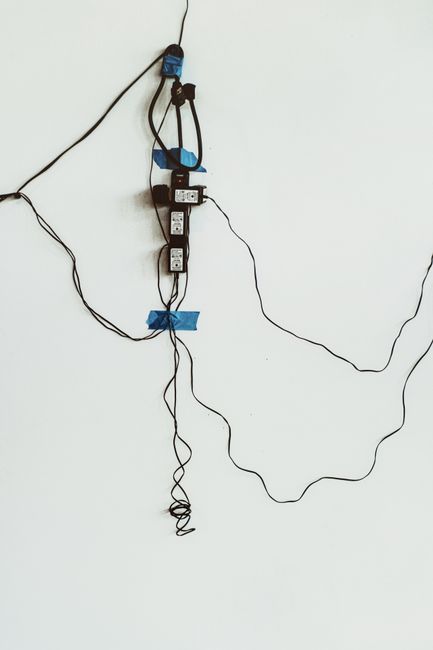
I used to wrap extension cords the same way I wrap everything — around my elbow and hand in a tight loop. Every time I unwrapped one, it came off the coil in a series of kinks and figure-eights that took longer to untangle than the actual job I needed the cord for.
Then a sound engineer showed me how they wrap cables on movie sets. They coil hundreds of feet of cable every day. If there was a better way, they would know it. And they do.
Why the Elbow Wrap Ruins Cords
When you wrap a cord in tight loops around your arm, you are twisting the internal copper wires with every loop. Each loop adds one full twist. After 20 loops, the wires inside the insulation are spiraled like a phone cord from 1995. Over time, the copper work-hardens and eventually breaks — and you get a cord that works intermittently for no visible reason.
The tight loops also put stress on the plug ends where the wire meets the molded connector. That is why extension cords always fail at the plug, not in the middle.
The Over-Under Method
This method alternates the direction of each loop so the cord never accumulates twist. When you pull the cord out, it comes out straight — no kinks, no knots, no cursing.
- Hold the plug end in your left hand. Grab a length of cord with your right hand, about 18 inches down.
- Make the first loop (“over”): Bring your right hand toward your left, twisting your wrist so the cord naturally forms a loop. This is the normal direction — what you would do instinctively.
- Make the second loop (“under”): Grab another 18-inch section. This time, bring your hand toward you but twist your wrist the opposite direction — away from the coil — so the cord forms a loop that sits behind the first one.
- Alternate: over, under, over, under. Every other loop reverses the twist, so the twists cancel each other out.
It sounds complicated. It is not. After five minutes of practice, your hands figure it out and you stop thinking about it. The cord comes out straight every time.
Storage: The Velcro Strap Upgrade
Do not use the built-in plastic strap that came with the cord — it will break. Get a pack of reusable Velcro cable ties. They are $5 for a 50-pack. Wrap one around the middle of the coil, not through the center — through the center creates a pinch point that damages the cord over time.
Store cords hanging, not in a pile. I mounted a few large screw-in hooks on the garage wall. Each cord gets its own hook. They stay untangled, dry, and I can grab one without pulling down three others. A five-gallon bucket also works if you drop the coils in loosely — just do not cram them in.
📋 Quick Summary: Use the over-under cable wrapping method — alternate the twist direction of each loop to cancel accumulated twist. This prevents kinks and extends cord life by protecting the internal copper wires. Store hanging on hooks with Velcro ties, not in tight arm-wrapped coils.